
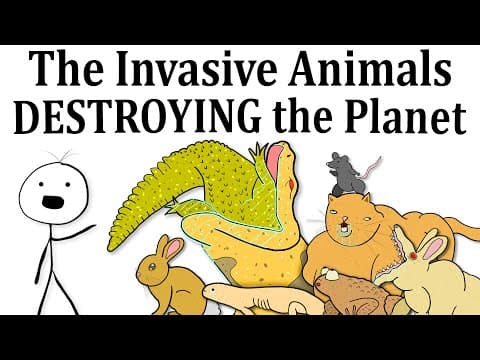
This blog post explores the impact of invasive animal species on ecosystems worldwide, detailing specific examples such as silver carp, cane toads, rabbits, rodents, Burmese pythons, wild pigs, brown tree snakes, and feral cats, highlighting their destructive behaviors and the efforts to control their populations.
Invasive species pose a significant threat to ecosystems around the globe. This post delves into some of the most destructive invasive animals, examining their origins, impacts, and the measures taken to control their populations.
Silver carp are notorious for their destructive impact on aquatic ecosystems, particularly in the United States. Originally introduced from Asia in the 1970s to help clean private lakes, these fish escaped during floods and proliferated in the Mississippi River and its tributaries.
Silver carp are filter feeders, consuming algae and plankton, which leads to competition with native species for food. Their population explosion has resulted in significant ecological disruption, with states employing various methods to control their spread, including shocking the water and hosting bow fishing tournaments.
Interestingly, one proposed solution is to encourage consumption of silver carp, which are healthy and low in mercury. However, they remain largely unpopular as a food choice among Americans.
Cane toads, native to Central America, have wreaked havoc in Australia since their introduction in 1935. Initially brought in to control cane grubs, they instead became a major pest, consuming a wide range of native wildlife.
With a population of around 200 million in Australia, cane toads have contributed to the decline of several native species due to their toxic secretions. Some native animals are beginning to adapt, but the overall ecological damage is profound.
In Australia, residents are advised to humanely capture cane toads and dispose of them in a way that minimizes suffering.
The introduction of rabbits to Australia in 1859 for sport hunting led to an explosion in their population, with estimates of over 10 billion rabbits today.
Rabbits have devastated vegetation, leading to severe ecological consequences. Attempts to control their population through bioweapons like the myxoma virus have had limited success, as rabbits develop immunity over time.
Rats and mice have followed humans across the globe for thousands of years, becoming a significant nuisance in urban areas and a destructive force on islands.
In places like New Zealand, invasive rodents have contributed to the extinction of 40 to 50% of native bird species by consuming their food sources and competing for resources.
The Burmese python, native to Southeast Asia, has become a significant predator in Florida's Everglades since its introduction in the 1980s.
These snakes consume a wide variety of animals, leading to a dramatic decline in native species populations. Hunting these pythons has become a job for many Floridians, with rewards for capturing them.
Wild pigs, originally brought to the U.S. and other regions as a food source, have become a destructive force in many ecosystems.
They are omnivorous and engage in rooting, which destroys native plants and contaminates water sources. Their population continues to grow, prompting extreme control measures, including aerial hunting.
The brown tree snake, accidentally introduced to Guam in the 1940s, has led to the extinction of several native bird species and caused frequent power outages.
With around 2 million snakes on the island, their predation has drastically altered Guam's ecosystem. Efforts to control their population include dropping poisoned mice from helicopters.
Feral cats, initially brought to Australia to control rodent populations, have become the deadliest invasive species, with millions roaming the wild.
They are responsible for the extinction of numerous native species and the endangerment of many more, killing an estimated 1 million native birds and reptiles daily.
Authorities are employing various strategies, including poison baits and creating cat-free zones to protect vulnerable wildlife.
Invasive species like silver carp, cane toads, rabbits, rodents, Burmese pythons, wild pigs, brown tree snakes, and feral cats illustrate the profound impact that non-native animals can have on ecosystems. Understanding these threats is crucial for developing effective management strategies to protect native wildlife and preserve biodiversity.



















