
This blog post explores the life of Abraham, detailing his journey from Mesopotamia to Canaan, his encounters with God, and the significant events that shaped his legacy, including the promise of a great nation and the testing of his faith.
Abraham, a pivotal figure in biblical history, was born approximately 4,000 years ago in the ancient city of Ur in Mesopotamia. His life unfolds against a backdrop of significant events, including the aftermath of the great flood and the teachings of his great-great-grandfather, Noah. This post will take you through Abraham's journey, highlighting key moments that defined his faith and the promises made to him by God.
Abraham's early life was steeped in the worship of Mesopotamian idols, despite Noah's influence. However, a transformative moment occurred when God spoke to Abraham, instructing him to leave his homeland. God promised Abraham not only a new land but also that he would become the father of a great nation, through which the entire world would be blessed.
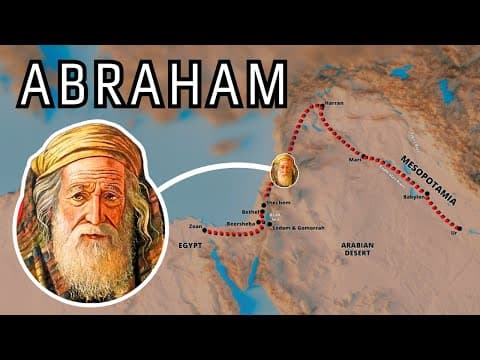
In faith, Abraham took his family and departed, likely following a common trade route to reach the city of Haran. Here, he stayed until the death of his father, Terah. At the age of 75, Abraham, along with his wife Sarai and his nephew Lot, left Haran, embarking on a journey that would lead them to Canaan.
Upon arriving in Canaan, Abraham encountered various challenges, including a famine that forced him to travel to Egypt. In Egypt, he faced a moral dilemma, asking Sarai to pose as his sister to protect himself from the Pharaoh's desire for her. This led to God intervening, sending plagues to protect Sarai and ultimately resulting in their expulsion from Egypt.
Back in Canaan, Abraham and Lot faced a new problem: their growing herdsmen and livestock created tension over land. To resolve this, Abraham generously allowed Lot to choose his land first, leading Lot to settle in the fertile plains of Jordan, near the cities of Sodom and Gomorrah.
Abraham established his camp in Mamre, where he built an altar to God. This site holds historical significance, as it is believed to be where God physically spoke to Abraham. Archaeological findings in the region have preserved remnants of altars dating back to Abraham's time, showcasing the enduring legacy of his faith.
Tragedy struck when four kings from the East invaded Canaan, capturing Lot. In a display of bravery, Abraham rallied his servants and successfully rescued Lot, defeating the kings and reclaiming the stolen goods. This act of valor earned Abraham the respect of the local kings, including Melchizedek, the king of Salem, who blessed Abraham and acknowledged God's role in his victory.
Despite his successes, Abraham was troubled by the lack of an heir. God reassured him, promising that his descendants would outnumber the stars. To signify the seriousness of this promise, God made a covenant with Abraham, symbolized by the cutting of animals in half, a customary practice of the time.
In an attempt to fulfill God's promise, Sarai suggested that Abraham have a child with her maidservant, Hagar. This led to the birth of Ishmael, but it also created tension within the family. God, however, reaffirmed His promise that Sarai would bear a son, leading to the eventual birth of Isaac, whose name means laughter, reflecting the joy of this miraculous event.
As Lot settled in Sodom, the city became notorious for its wickedness. God revealed to Abraham His intention to destroy Sodom due to its evil. Abraham interceded, negotiating with God to spare the city if ten righteous people could be found. Unfortunately, the city was ultimately destroyed, but Lot and his family were saved, albeit with tragic consequences for Lot's wife, who looked back and turned into a pillar of salt.
Abraham's faith was tested when God commanded him to sacrifice his beloved son Isaac. Despite the emotional turmoil, Abraham believed in God's promise and prepared to obey. At the last moment, an angel intervened, stopping the sacrifice and providing a ram instead. This event foreshadowed the ultimate sacrifice of Jesus Christ, who would lay down His life for humanity.
Abraham's journey is a testament to faith and obedience. His life exemplifies the call to trust in God's promises, even in the face of uncertainty. As Abraham's story concludes, we see the fulfillment of God's promises through his descendants, culminating in the arrival of Jesus Christ, who offers salvation to all who believe. Abraham's legacy continues to inspire faith and hope in countless lives today.



















