
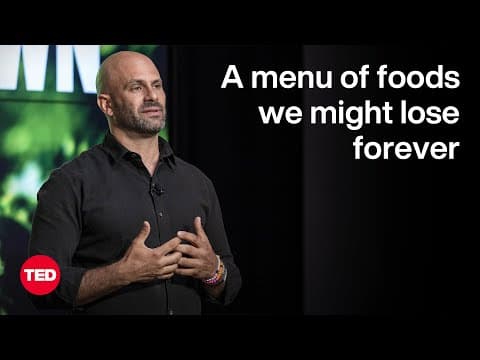
Sam Kass discusses the alarming impact of climate change on our food supply, highlighting the potential loss of staple foods like peaches, wheat, salmon, chocolate, and coffee. He emphasizes the urgent need for action to adapt our food systems and leverage innovative solutions to combat these challenges.
In a thought-provoking presentation, Sam Kass introduces a menu that reflects the dire predictions of climate change's impact on our food supply. This menu serves as a stark reminder of what could be lost for future generations, emphasizing the importance of understanding the stakes involved in climate discussions.
Kass, who began his career as a chef and has since transitioned into policy and innovation, first conceived this menu idea during the COP21 conference in Paris in 2015. His goal is not to instill despair but to foster a deeper understanding of climate change and its implications for our food systems.
The appetizers on this menu highlight the struggles faced by fruit trees, particularly nuts and stone fruits like peaches and almonds. Kass notes a staggering 95 percent loss of the Georgia peach crop last year, suggesting that such fruits may not be cultivated in the future due to changing environmental conditions.
Core commodities such as wheat, rice, and chickpeas are also at risk. Current models predict that for every one degree of warming, there will be a 7.5 percent decline in yields. Furthermore, while only 15 percent of the world's wheat is currently produced under persistent drought conditions, this figure could rise to 60 percent with a two-degree increase in global temperatures. The implications of these changes include food insecurity, malnutrition, and political instability driven by resource scarcity.
Moving to the main course, Kass discusses the plight of salmon, which face challenges from warming rivers and reduced snowpack. By 2050, it is projected that half of the river flow necessary for salmon spawning will be lost, making their survival increasingly difficult. Recent events in California, where commercial fishing was halted due to a lack of fish, illustrate the immediate nature of these challenges.
Unfortunately, the dessert course is equally grim. Chocolate, which is primarily grown near the equator, faces severe threats from climate change. Models indicate that no regions will remain suitable for chocolate production if temperatures rise by two degrees. This year alone, chocolate prices surged by 50 percent due to adverse weather conditions affecting production.
Kass also addresses the future of coffee, revealing that half of the current coffee-growing regions may become unsuitable for cultivation under two degrees of warming. With 75 of the 124 wild coffee varieties nearing extinction, the loss of genetic diversity poses a significant risk to future coffee production.
Kass emphasizes that the purpose of this discussion is not to frighten but to create an emotional connection to the food we cherish. He reflects on the importance of passing down a rich and vibrant food culture to future generations, underscoring the stakes involved in climate change.
Food systems are significant contributors to environmental degradation, being the leading driver of biodiversity loss, deforestation, and greenhouse gas emissions. Kass argues that unlike other sectors, food and agriculture are on an unsustainable trajectory, necessitating urgent action to mitigate their negative impacts.
As we face an era of extreme volatility with dwindling resources, Kass calls for increased investment in adapting our food systems to these realities. He stresses the need for resilience in the face of climate challenges, as current preparations are insufficient.
Despite the grim outlook, Kass expresses hope in the potential of food and agriculture to sequester carbon and mitigate climate change. He highlights innovative solutions, such as Loam Bio's fungi microbes that enhance carbon storage in soil and Inari Agriculture's modern breeding techniques that improve crop yields while reducing chemical inputs.
Kass concludes with a powerful message: while the challenges are daunting, we have the tools and knowledge to address them. He urges everyone to step out of their comfort zones and take bold actions to ensure that future generations can enjoy the meals we hold dear today. The time to act is now, and together, we can meet the moment to secure a sustainable food future for our children and grandchildren.



















