
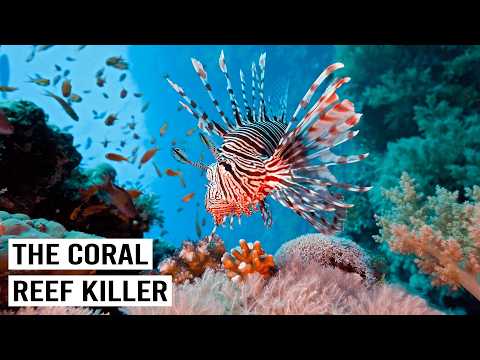
The lionfish, a beautiful yet venomous predator native to the Indo-Pacific, has become an invasive species wreaking havoc on coral reefs across the Caribbean and Western Atlantic. This blog post explores the lionfish invasion, its impact on marine ecosystems, and the ongoing efforts to control its population through hunting, derbies, and public awareness.
This captivating creature is the lionfish. With its beautiful appearance, it may seem harmless, but beware: its sharp, venomous spines pack a nasty punch. Native to the Indo-Pacific, lionfish have become an invasive species across the Caribbean and much of the Western Atlantic, spreading out in all directions and threatening native marine life.
Lionfish are efficient predators and prolific breeders, capable of wiping out native species at an alarming rate in regions like Mexico, Florida, and the Caribbean. Despite suppression efforts, their numbers continue to rise rapidly. They have now made their way to Central and South America, prompting teams of scuba divers in Florida to participate in lionfish derbies, where they compete to capture the most lionfish in a single day.
Many people are unaware of what lionfish are or why they pose a threat. In interviews, individuals expressed confusion about the fish, with some describing its appearance but lacking knowledge about its invasive nature. This lack of awareness highlights the need for increased education on the lionfish crisis.
The Florida Keys National Marine Sanctuary, covering nearly 3,000 square miles, is home to extensive coral reefs and a diverse array of marine life. However, it faces numerous environmental challenges, with the lionfish invasion being one of the most destructive threats. Reports of lionfish sightings began to increase around the year 2000, indicating a growing problem that needed urgent attention.
Local businesses, particularly those reliant on diving tourism, are concerned about the lionfish invasion. Captain Gary Mace, who operates Conch Republic Divers, emphasizes the importance of controlling lionfish populations to protect the reefs and, consequently, his livelihood. The lionfish consume juvenile fish, which can devastate local fish populations and the overall health of the reef ecosystem.
Scuba divers and marine biologists have joined forces to combat the lionfish invasion. Using various techniques, including spearfishing and capture nets, they aim to remove lionfish from the reefs. However, the process is not without its challenges. Lionfish are often found in deep waters and can be difficult to catch, requiring divers to use specialized equipment.
The lionfish derby in Key Largo brings together teams from across South Florida to capture as many lionfish as possible. With no bag limits and minimal rules, participants engage in an all-out offensive against these invasive fish. The competition not only raises awareness but also provides a fun and engaging way for the community to participate in conservation efforts.
Lionfish are unique in their reproductive capabilities; a single female can produce up to two million eggs per year, which are dispersed by ocean currents. This biological advantage contributes to their rapid spread and makes controlling their population a daunting task. Marine biologists are studying lionfish to understand their feeding habits and the impact they have on local ecosystems.
Despite their destructive nature, lionfish are also recognized for their culinary potential. Many chefs have begun to incorporate lionfish into their menus, promoting it as a delicious alternative to overfished species like snapper and grouper. The meat is mild and flaky, making it a popular choice among seafood lovers.
The lionfish invasion poses a significant threat to coral reefs and marine ecosystems in the Caribbean and Western Atlantic. While eradication may not be feasible, ongoing efforts to control their population through hunting, public awareness, and culinary promotion are crucial. As the lionfish continues to be a part of the Florida Keys story, it is up to us to address this issue and protect our marine environments for future generations.



















