
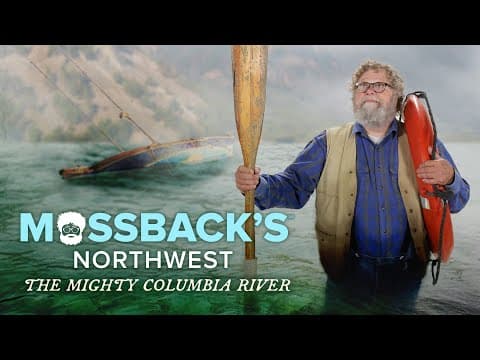
The Columbia River, a vital lifeline of the Pacific Northwest, has undergone dramatic changes over millions of years due to geological forces and human intervention. This blog explores its tumultuous history, from ancient floods to modern dams, and the impact on indigenous cultures and ecosystems.
In the Pacific Northwest, water is everywhere, and none is more significant than the Columbia River. This majestic river forms part of the border between Washington and Oregon, flowing from the mountains of Canada through the Cascades to the Pacific Ocean. It is not only a source of sustenance for the people of the region but also powers industries and shapes the landscape. Despite its importance, much of its history remains unknown to many. This blog delves into the tumultuous history of the Columbia River, exploring how it has changed over millions of years and the forces that have shaped it.
The Columbia River has existed in some form for at least 17 million years, but its course has been radically altered by cataclysmic geological events. Initially, the river flowed diagonally across Washington State from British Columbia to the Pacific. However, volcanic activity and ice ages have dramatically changed its path.
Nick Sinner, host of Cascade PBS's series "Nick on the Rocks," explains that the Columbia River's current course was influenced by ancient lava flows. Around 16 million years ago, basalt lava erupted in northeastern Oregon, creating a massive barrier that redirected the river's flow to its present location. This volcanic activity was a significant detour in the river's journey.
The last ice age, which began to recede about 17,000 years ago, also played a crucial role in shaping the Columbia River. The vast Cordilleran Ice Sheet blocked and unblocked rivers, including the Columbia. Around 15,000 years ago, the ice sheet created Glacial Lake Missoula, which eventually breached its ice dam, unleashing catastrophic floods that reshaped the landscape. These floods carved out the Columbia Basin and widened the gorge through the Cascade Mountains, leaving behind a unique topography that geologists continue to study.
The Columbia River has been a vital artery for trade and settlement for thousands of years. Indigenous peoples thrived along its banks, utilizing its resources for sustenance and trade. However, the arrival of Euro-American explorers in the 19th century marked a turning point in the river's history.
Despite its significance, early explorers struggled to locate the Columbia River. Lewis and Clark, who journeyed to the Pacific, faced harsh winter storms and sought shelter in what Clark called a "dismal little niche." The river's mouth, known as Cape Disappointment, was notoriously difficult to navigate, leading to many maritime disasters. The river's shifting sandbars and rough waters claimed the lives of countless sailors and ships, establishing a grim reputation for the Columbia Bar.
The construction of dams, particularly the Grand Coulee Dam in the 1930s, transformed the Columbia River's ecosystem. While the dam provided hydroelectric power and irrigation for agriculture, it also devastated salmon runs and disrupted the cultures of indigenous peoples who had relied on the river for millennia. Today, the Columbia River is home to 14 dams, each altering its flow and ecology.
The Columbia River has long been a lifeline for indigenous peoples, who have inhabited its banks for thousands of years. The discovery of Kennewick Man, an ancient skeleton found near the river, sparked debates about the region's history and the connection between indigenous peoples and the land. DNA testing revealed that Kennewick Man was approximately 8,500 years old and directly related to the indigenous tribes of the Columbia region.
The river served as a major trade route, connecting various tribes and facilitating the exchange of goods. Before the arrival of Euro-Americans, the Columbia River was a bustling hub of commerce, where tribes gathered to trade salmon, dried fish, and other resources. However, the introduction of foreign diseases and colonial trade drastically reduced indigenous populations, forever altering the cultural landscape of the region.
Today, the Columbia River continues to be a vital resource for the Pacific Northwest, but its future is uncertain. Climate change poses significant threats to the river's ecosystem, with shrinking glaciers and declining snowpack affecting water supply and hydropower production. A recent study suggests that most glaciers in Western Canada could disappear within 80 years due to rising temperatures.
As we reflect on the history and significance of the Columbia River, it is crucial to recognize the interconnectedness of its past, present, and future. The river has shaped the lives of countless individuals and communities, and its health is vital for the region's sustainability. Understanding the Columbia River's story is essential for preserving its legacy and ensuring that future generations can continue to benefit from its resources.
In conclusion, the Columbia River is more than just a body of water; it is a symbol of resilience, transformation, and the enduring connection between people and the land. As we navigate the challenges ahead, let us honor the river's history and work towards a sustainable future for this mighty waterway.



















