
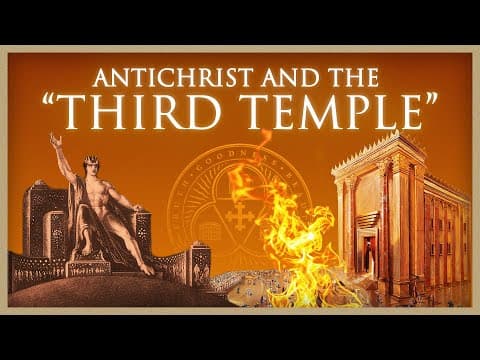
In AD 363, Emperor Julian the Apostate attempted to rebuild the Jewish Temple in Jerusalem, a project that was miraculously thwarted by a series of divine interventions, including fire and earthquakes. This historical event serves as a warning against future attempts to rebuild the Temple, which many Christians view as antichristic.
What if I told you that there was an ancient attempt to rebuild the Third Temple in Jerusalem, but God miraculously prevented it? This fascinating historical event took place in AD 363, initiated by Julian the Apostate, a pagan emperor, and various Jewish leaders. This blog post will explore the details of this event, the divine interventions that thwarted it, and its implications for contemporary discussions about the Third Temple.
The Jewish Temple in Jerusalem was destroyed in AD 70, depriving the Jewish people of the means to keep the Law of Moses for nearly three centuries. In AD 363, Julian the Apostate sought to rebuild the Temple, believing that its reconstruction would disprove Christianity, which had predicted its destruction. However, this attempt was thwarted by a series of miraculous events that many interpreted as divine intervention.
Julian, raised as a Christian but later rejecting the faith, became the first emperor after Constantine to promote paganism in the Roman Empire. He believed that rebuilding the Jewish Temple would serve as proof that Christianity was false, as both Christ and the prophet Daniel had foretold its destruction. To this end, he provided public funds for the project, which was met with enthusiasm by many Jews.
The rebuilding effort was met with a series of catastrophic events:
Ultimately, these events led to the abandonment of the project, which was seen as a clear sign of God's will against the rebuilding of the Temple.
Numerous ancient sources, both pagan and Christian, document this event, providing a rich tapestry of perspectives:
These accounts highlight a consensus among early Christians that the attempt to rebuild the Temple was not only futile but also a direct challenge to God's will.
The failed attempt to rebuild the Temple in AD 363 serves as a cautionary tale for contemporary discussions about the Third Temple. Many influential figures today speculate that a Third Temple will be built in Jerusalem, often overlooking the historical precedent of Julian's attempt and the unanimous condemnation it received from early Christians.
Christians believe that the true Temple is the body of Christ, represented in the Catholic Church, where God is worshiped through the sacrifice of Jesus Christ. Any proposal for a physical Third Temple is seen as an affront to this belief, as it suggests that the sacrifice of Christ is insufficient.
The miraculous thwarting of Julian the Apostate's attempt to rebuild the Jewish Temple is a profound historical event that resonates with contemporary discussions about faith, prophecy, and divine intervention. As we reflect on this event, it serves as a reminder of the enduring truth of God's promises and the futility of human efforts to contradict His will. May this ancient story inspire us to remain vigilant and faithful in our understanding of God's plan for humanity.



















