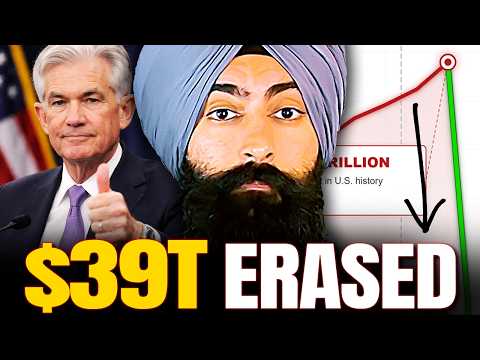
On May 15th, 2026, a new Federal Reserve chairman, Kevin Worsh, will take office with a plan to tackle the United States' $39 trillion national debt crisis. His approach involves cutting interest rates, shrinking the Fed's balance sheet, and leveraging AI to control inflation. This strategy echoes past financial repression tactics used after WWII, aiming to reduce the debt-to-GDP ratio by making government borrowing cheaper while creating investment opportunities amid economic shifts.
On May 15th, 2026, the United States will witness a significant change at the helm of the Federal Reserve Bank. Kevin Worsh is set to become the new chairman, bringing with him a fresh strategy to address the nation's staggering $39 trillion debt crisis. This transition is poised to impact the economy profoundly, affecting everything from interest rates to inflation, and ultimately, the financial well-being of millions.
Despite its name, the Federal Reserve Bank is neither a traditional bank nor a federal entity. It does not hold cash reserves, nor can the government directly control its decisions. This independence means that the Federal Reserve operates with a degree of autonomy, making its leadership and policies crucial to the nation's economic health.
The current chairman, Jerome Powell, has faced criticism, notably from former President Trump, for not lowering interest rates as quickly as desired. However, Powell's term expires on May 15th, 2026, allowing President Trump to appoint Kevin Worsh as the new chairman.
The United States currently grapples with a national debt exceeding $39 trillion. More concerning is the annual interest payment on this debt, which surpasses $1 trillion, consuming a significant portion of taxpayers' dollars without directly benefiting public services or infrastructure.
The debt-to-GDP ratio, a critical measure of economic health, stands at approximately 125% in 2025, indicating that the debt exceeds the size of the economy. This ratio is even higher than the post-World War II period, which was around 106% in 1946.
After World War II, the United States faced a similar debt crisis. Instead of paying off the debt outright, the government employed a strategy known as financial repression. This approach involved:
Keeping Interest Rates Artificially Low: The Federal Reserve maintained interest rates below the inflation rate, often near 0%, while inflation hovered between 5% and 10%.
Forcing Institutions to Buy Government Bonds: New laws and regulations compelled banks, pension funds, and other financial institutions to purchase government bonds at low interest rates.
This strategy allowed the government to borrow money at minimal cost, effectively inflating away the real value of the debt as the economy grew faster than the debt itself. Between 1946 and 1974, while the national debt increased, the economy expanded even more rapidly, reducing the debt-to-GDP ratio to a manageable 25%.
Unlike the post-war era, today's government borrows primarily through short-term loans (one to two years) rather than long-term bonds. This situation is akin to having an adjustable-rate mortgage on the national debt, making the cost of servicing the debt highly sensitive to interest rate fluctuations.
If interest rates rise, the cost of debt servicing will increase significantly, exacerbating the debt crisis. Conversely, lowering interest rates would reduce these costs.
Kevin Worsh has outlined a strategic plan to address the debt crisis, focusing on three main actions:
Worsh aims to reduce interest rates by one full percentage point within 2026, lowering them from approximately 3.75% to around 2.75%. With inflation estimated at about 3%, this move would place interest rates below inflation, initiating a new phase of financial repression.
Lower interest rates would make servicing the $39 trillion debt cheaper, reducing the government's annual interest payments and freeing up taxpayer dollars.
The Federal Reserve currently holds a significant amount of U.S. Treasury securities, which are loans to the government. Worsh plans to sell off some of these treasuries, effectively pulling money out of the economy to combat inflation.
However, selling treasuries typically leads to higher interest rates, as the government must offer better incentives to attract lenders. Worsh believes that private demand from individuals, institutions, and foreign governments will absorb these treasuries, preventing a spike in interest rates.
Worsh is optimistic that advancements in AI will help reduce business costs and increase productivity, thereby lowering inflationary pressures. This technological boost could allow the Federal Reserve to cut interest rates without triggering significant inflation.
While Worsh's plan is ambitious, it carries risks:
Private Demand for Treasuries: If private investors do not absorb the treasuries sold by the Fed, interest rates could rise, increasing debt servicing costs.
Regulatory Measures: To ensure sufficient demand for government bonds, the government might introduce regulations compelling institutions to invest in treasuries, similar to post-WWII financial repression.
Impact on Savers: Historically, financial repression benefits the government and borrowers at the expense of savers, who earn returns below inflation, effectively losing purchasing power.
Financial repression tends to make cash savings less attractive due to low real returns. Conversely, asset prices such as stocks, real estate, gold, and cryptocurrencies often rise during these periods, benefiting investors who hold such assets.
Investors should consider diversifying their portfolios to include assets that can hedge against inflation and benefit from economic growth.
The appointment of Kevin Worsh as the new Federal Reserve chairman marks a pivotal moment in addressing America's debt crisis. His plan to cut interest rates, shrink the Fed's balance sheet, and utilize AI to manage inflation draws on historical precedents while adapting to modern economic realities.
While challenges remain, understanding these dynamics is crucial for individuals and investors to navigate the evolving economic landscape and seize emerging opportunities.
As the situation unfolds, staying informed and prepared will be key to mitigating risks and capitalizing on potential growth in this transformative period for the U.S. economy.