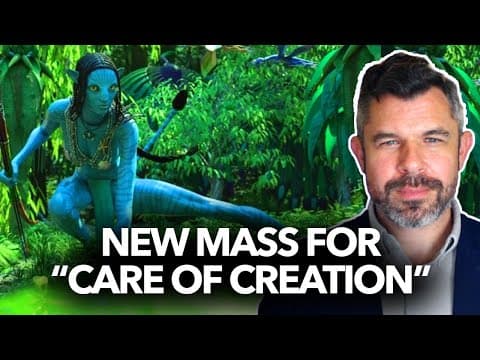
The Vatican's announcement of a new Mass for the Care of Creation has sparked concerns about liturgical changes and potential pantheism. Dr. Taylor Marshall discusses the significance of this new votive mass, its context within the Church, and introduces his concept of a Texan Rite Mass that reflects local culture.
The Vatican has recently announced the upcoming release of a new Mass for the Catholic Church, titled the Mass for the Care of Creation. This initiative, coming from the Dicastery for Divine Worship, has raised concerns among many regarding the potential implications for liturgical practices within the Church. In this blog post, we will explore the details of this new Mass, its context, and the broader implications for the Catholic liturgy, including a unique proposal for a Texan Rite Mass.
The Mass for the Care of Creation is not a new rite but rather a votive Mass intended to emphasize the importance of caring for the environment. The Latin title for this Mass is "Pro Custodial Creationis," which translates to "For the Guardianship of Creation." It will be added to the existing votive Masses, which have historically included prayers for various needs, such as agricultural well-being during droughts.
Many Catholics are apprehensive about this new Mass, particularly in light of recent adaptations of the liturgy for indigenous cultures, such as the Amazonian Rite and the Mayan Rite. Critics argue that these adaptations risk promoting a form of pantheism, where creation is worshipped above God. However, it is essential to clarify that the Mass for the Care of Creation is not intended to elevate creation to the status of divinity but rather to encourage stewardship of the environment as a reflection of our faith.
The announcement of this new Mass follows a period of experimentation with various rites, including the Amazonian Rite, which sought to incorporate local customs and rituals into the liturgy. This approach has led to concerns about the Church's unity and the potential fragmentation of the liturgy into numerous localized expressions. The involvement of Vatican officials, such as Cardinal Michael Sarin and Archbishop Victoriao Viola, in drafting the new Mass text has also raised eyebrows, particularly given their previous statements about the Church's structure and identity.
The Mass for the Care of Creation was developed under the pontificate of Pope Francis, and while some view its continuation under the new Pope Leo I as a sign of ongoing support for these initiatives, others argue that it reflects a broader trend within the Church towards localized adaptations of the liturgy. This raises questions about the balance between maintaining a universal Church and allowing for cultural expressions within the liturgy.
In light of the ongoing discussions about localized rites, Dr. Taylor Marshall has proposed the creation of a Texan Rite Mass (TRM). This concept aims to reflect the unique cultural identity of Texas while maintaining the core elements of the Catholic liturgy. The TRM would incorporate local customs, language, and attire, such as denim chasubles for priests and the use of Texan vernacular in the liturgy.
The Texan Rite Mass would feature:
Dr. Marshall emphasizes that caring for creation is not merely an environmental concern but a deeply rooted aspect of Christian stewardship. The call to care for the earth aligns with the biblical mandate given to Adam and Eve to tend to the Garden of Eden. This perspective encourages a holistic approach to health, nutrition, and environmental responsibility, advocating for practices that promote natural farming and sustainable living.
While advocating for environmental stewardship, it is crucial to avoid falling into the trap of idolizing creation. The focus should remain on caring for the earth as a gift from God, rather than worshipping it. This balance is essential for maintaining a faithful Christian perspective on environmental issues.
The introduction of the Mass for the Care of Creation presents an opportunity for the Church to engage with contemporary environmental concerns while remaining rooted in its theological foundations. As discussions about localized rites continue, the proposal for a Texan Rite Mass highlights the importance of cultural expression within the liturgy. Ultimately, the call to care for creation is a call to stewardship, reflecting our commitment to God and His creation.
As we navigate these changes, it is essential to remain vigilant in our faith, ensuring that our practices honor God while fostering a deeper connection to the world around us.