
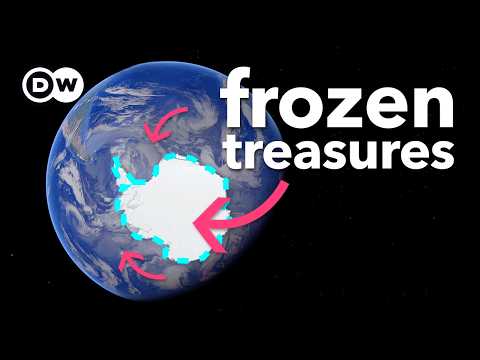
Antarctica, rich in resources and governed by an international treaty, faces increasing geopolitical tensions and environmental threats. As countries vie for influence and resources, the future of this pristine continent hangs in the balance, necessitating stronger cooperation and protection efforts.
In 1977, a pregnant Argentinian woman was flown to Antarctica, tasked with giving birth in one of the harshest environments on Earth. In 1978, Emilio Palma became the first human born on the continent, marking the beginning of a unique competition between Argentina and Chile over territorial claims. This competition, symbolized by the births of ten individuals in Antarctica, was an attempt to establish a sense of native presence in a land that neither country could officially claim. Today, the focus has shifted from births to strategic positioning on a continent rich in resources, yet still largely unclaimed.
Antarctica is often described as the highest, driest, wettest, iciest, coldest, and windiest place on the planet. It is a frozen desert, one and a half times the size of the United States, with minimal rainfall. Despite its harsh conditions, Antarctica is home to vast resources that are increasingly sought after. Daniela Liggett, an expert in Antarctic governance, highlights that approximately 75% of the world's freshwater is stored in the Antarctic ice sheets, some of which are over 100,000 years old. Beneath this ice lies a continent rich in minerals, including copper, iron, uranium, gold, and even diamonds.
The surrounding ocean is equally significant, containing the strongest ocean current in the world, which plays a crucial role in global nutrient distribution. The waters are teeming with krill, tiny shrimp that are vital to the marine ecosystem and help mitigate climate change by removing millions of tons of CO2 from the atmosphere annually. Additionally, the ocean is home to valuable fish species, such as the Chilean sea bass, and vast reserves of oil and natural gas, estimated at around 500 billion barrels and 300 to 500 billion tons, respectively.
Antarctica is unique in that it is governed by an international agreement known as the Antarctic Treaty, which was established in the wake of geopolitical tensions in the mid-20th century. Initially, seven countries claimed portions of the continent, leading to concerns about militarization and resource exploitation. India's complaint to the UN in 1956 about potential nuclear activities prompted a shift towards international cooperation, culminating in the Antarctic Treaty, which dedicates the continent to peace and scientific research.
The treaty invalidated historical land claims, prohibits military activity, and mandates the sharing of scientific research. Currently, 58 countries are signatories, with 29 participating in decision-making processes. This unprecedented cooperation has allowed nations to set aside geopolitical differences in favor of scientific collaboration.
Despite the success of the Antarctic Treaty, recent years have seen a rise in geopolitical tensions. Countries like Chile, Australia, and the United Kingdom have made claims regarding the waters off their coasts, while Norway has openly asserted its territorial claims. The ongoing conflict in Ukraine has further complicated negotiations, leading to concerns about the future of the treaty, especially with the year 2048 approaching, when any signatory can propose amendments.
One significant concern is the potential lifting of the mining ban, which could open Antarctica to resource extraction. Although achieving such a change would require the agreement of three-quarters of the treaty's members, the mere possibility raises alarms among environmentalists and scientists alike. Additionally, illegal fishing has surged in recent years, threatening krill populations and, consequently, the entire Antarctic ecosystem.
The Antarctic ecosystem is delicate, and the decline of keystone species like krill poses a threat not only to local wildlife but also to global climate stability. Krill play a crucial role in carbon sequestration, and their depletion could have dire consequences for the planet. Furthermore, the increase in tourism—over 120,000 visitors in the 2023/2024 season—exacerbates the risk of environmental degradation.
While the Antarctic Treaty prohibits military activities, some research stations contain technology that could be repurposed for military use. Reports of increased security presence and the exploration for oil by Russia raise further concerns about the integrity of the treaty.
To safeguard Antarctica, both individual actions and governmental commitments are essential. Consumers can help by avoiding products derived from krill, which are often harvested unsustainably. On a broader scale, countries must enhance their commitment to existing regulations and invest in the governance of Antarctic tourism and resource management.
Experts suggest that fostering scientific collaboration could strengthen the treaty and ensure that all nations have a voice in decision-making. Some advocate for a permanent ban on resource extraction to preemptively address potential conflicts over the continent's resources.
Antarctica is warming at an alarming rate, losing trillions of tons of ice since the 2000s. The implications of a melting Antarctic are profound, with potential sea-level rises of up to 58 meters. As scientists continue to study this critical region, it is imperative that nations prioritize cooperation and protection efforts to preserve Antarctica for future generations.
In conclusion, the future of Antarctica hinges on the balance between resource interests and environmental stewardship. With increased attention and collaboration, there is hope for maintaining the integrity of this unique and vital part of our planet.



















