
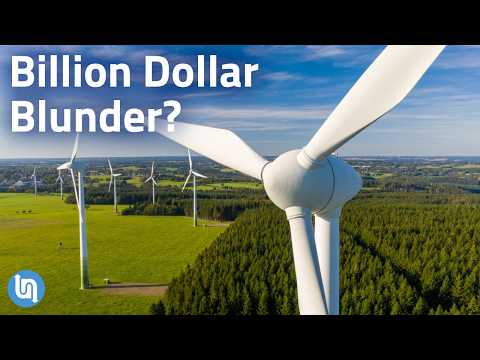
The U.S. wind industry faced significant challenges in 2023, marked by low wind speeds, rising costs, and community opposition, leading to a drastic decline in new installations and project cancellations. Despite these setbacks, there are signs of potential recovery as the industry matures and new projects are developed.
The U.S. wind industry has encountered a rough patch in recent years, particularly in 2023. This year has been characterized by a significant decline in new wind turbine installations, with offshore wind projects seeing no progress at all. This situation has unfolded against a backdrop of high-profile accidents and growing public discontent towards wind energy. In comparison to solar energy, wind energy deployment in the U.S. has lagged considerably. This article delves into the factors contributing to these challenges and explores the potential for recovery in the wind sector.
According to a recent report from the U.S. Department of Energy’s Lawrence Berkeley National Laboratory, the contribution of wind power to total U.S. electric power capacity additions fell to 12% in 2023, the lowest level since 2013. Furthermore, the year marked the slowest pace of new wind deployment since 2014, with all newly installed projects being land-based, as no offshore projects were commissioned.
One of the critical factors impacting the wind industry in 2023 was the weather. Low wind speeds significantly hindered electricity generation, particularly in the Midwest, which is home to many of the tallest wind turbines in the country. Despite typically experiencing strong winds, the Midwest faced a notable decline in wind speeds, leading to a 2.1% decrease in wind generation from 2022 to 2023. However, it is essential to contextualize this decline, as 2022 was an unusually windy year, making comparisons somewhat misleading.
The decline in wind energy installations can also be attributed to several economic factors. The cost of wind turbines has surged by approximately 38% over the past two years, driven by rising prices for essential materials such as steel, cables, and critical minerals. An analysis revealed that the average price of significant minerals for the wind industry increased by 93% since January 2020. Additionally, the rise in interest rates has made it more challenging for wind developers to secure financing for new projects, leading to cancellations and delays.
The financial strain on wind developers has resulted in significant project cancellations. For instance, SouthCoast Wind decided to terminate its power purchase agreement (PPA) with Massachusetts due to the economic hurdles of inflation, high interest rates, and supply chain issues. Similarly, Avangrid Renewables also opted to end its agreements for the same reasons, incurring termination fees of $60 million and $48 million, respectively.
In a more drastic move, Danish company Ørsted canceled its Ocean Wind I and II offshore projects in New Jersey, incurring a staggering penalty of 28.4 billion Danish kroner (approximately $2.7 billion). These cancellations highlight the severe financial pressures facing the offshore wind sector in the U.S.
In addition to economic challenges, community opposition has emerged as a significant barrier to wind energy projects. A survey conducted by the Lawrence Berkeley National Lab found that approximately 30% of wind project siting applications were canceled in the past five years, with community opposition cited as a primary cause. Developers are increasingly concerned that local resistance will hinder progress towards decarbonization goals.
The wind industry has also faced setbacks due to operational incidents. For example, Vineyard Wind 1, one of the first offshore wind farms in the U.S., experienced a blade failure during testing, leading to a federal shutdown of operations. Such incidents, while rare, contribute to public skepticism and opposition towards wind energy.
Despite the challenges faced in 2023, there are reasons for optimism in the U.S. wind industry. The offshore wind sector is still in its infancy, and many projects are in various stages of development. New England Wind 1, Vineyard Wind 2, and Revolution Wind are among the upcoming projects that could bolster the industry.
In December 2023, New York celebrated the milestone of the first offshore wind power being used at a commercial scale with the launch of South Fork Wind. This development signifies progress and potential for future growth in the sector.
While 2023 has been a challenging year for the U.S. wind industry, it is essential to recognize that setbacks are not indicative of long-term failure. The industry is still evolving, and as it matures, there is potential for recovery and growth. The future of wind energy in the U.S. will depend on addressing economic challenges, overcoming community opposition, and learning from past incidents. As the industry continues to develop, it remains crucial to engage in discussions about its future and the role it will play in the broader energy landscape.



















