
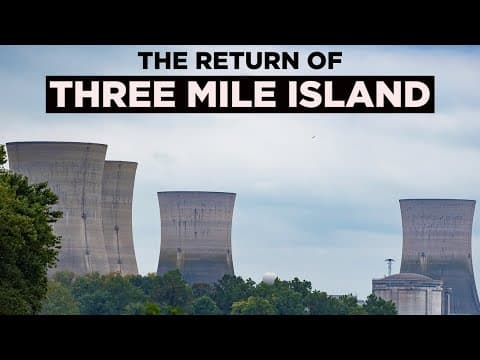
Three Mile Island, site of the worst nuclear accident in US history, is set to restart its Unit 1 reactor to support Microsoft’s energy needs for AI data centers. This blog explores the history of the incident, the current plans for the site, and the implications for the future of nuclear energy in the US.
On March 28th, 1979, the worst nuclear incident in US history unfolded at the Three Mile Island nuclear power plant in Pennsylvania. This catastrophic event was marked by a series of mechanical failures and human errors that brought the reactor perilously close to a meltdown. The incident released radioactive gas into the atmosphere, leading to a vast evacuation zone around the site and instilling fear in the surrounding communities. Approximately 140,000 people fled the area, although, remarkably, there were no injuries or deaths reported. The US Department of Energy stated that the exposure had no detectable health effects on plant workers or the public.
The accident at Three Mile Island was not an isolated event; it was preceded by other nuclear incidents that highlighted vulnerabilities within the industry. The malfunction began when the cooling pump on the Unit 2 reactor failed, causing pressure to rise dangerously high. A safety relief valve was activated but became stuck in the open position, leading to a drop in pressure that the operators were unaware of. This resulted in the reactor core overheating and undergoing a partial meltdown, damaging the uranium fuel rods and releasing radioactive material.
In the wake of the disaster, the Nuclear Regulatory Commission (NRC) implemented stricter regulations across the nuclear industry to prevent similar occurrences. Unit 2 was deemed beyond repair and was permanently shut down, while Unit 1 continued to operate for another 40 years until its closure in 2019 due to economic challenges posed by cheaper energy sources.
Fast forward to 2024, and the site of this infamous near-disaster is poised for a remarkable rebirth. Constellation Energy, which acquired Unit 1 in 1999, has struck a deal with Microsoft to restart the reactor under a new name: the Crane Clean Energy Center. This partnership aims to provide a significant portion of the power needed for Microsoft’s expanding data centers, which require reliable and clean energy sources.
Microsoft's involvement stems from its increasing energy demands, particularly for its data centers that support artificial intelligence (AI) operations. Nuclear energy is considered a clean power source as it does not produce greenhouse gases during operation. Moreover, it offers a stable and reliable energy supply, which is crucial for tech companies that require consistent power for their operations.
The agreement allows Microsoft to purchase carbon-free power directly from Constellation Energy for a period of 20 years. While Microsoft will draw electricity from the grid, Unit 1 will contribute over 800 megawatts of power, ensuring that the tech giant has the energy it needs to support its future plans.
Restarting a nuclear reactor that has been shut down for years is no small feat. However, the process for bringing Three Mile Island back online is less complicated than it would be for other plants that have undergone deconstruction. The reactor was placed in a state known as SAFSTOR, which involved minimal intervention beyond the removal of fuel and water, allowing radioactive materials to decay over time.
The relaunch of Unit 1 is expected to take four years and cost over $1.5 billion. This extensive effort includes evaluating the condition of all components, retrofitting systems to meet operational requirements, and restoring essential equipment such as turbines and cooling systems. Despite the aging appearance of some control room equipment, modern safety measures and monitoring systems will ensure the plant operates reliably.
Three Mile Island is not the only reactor restart project in the US; similar efforts are underway at the Palisades plant in Michigan and the Duane Arnold site in Iowa. However, the potential for more nuclear restarts is limited, as many recently closed plants have already undergone significant decommissioning.
The challenges of building new nuclear reactors also stem from the regulatory changes implemented after the Three Mile Island incident. Stricter training requirements and design standards have made it more difficult to construct new facilities. The Vogtle power plant in Georgia, which recently completed two reactors, took 15 years to build, highlighting the lengthy and complex process involved.
The revival of Three Mile Island as a clean energy source for Microsoft represents a significant shift in the narrative surrounding nuclear power. Once a symbol of disaster, the site is now being transformed into a potential case study for the future of energy in the US. As the demand for clean and reliable energy continues to rise, the lessons learned from the past may pave the way for a new era of nuclear energy that meets the needs of both industry and society.



















