
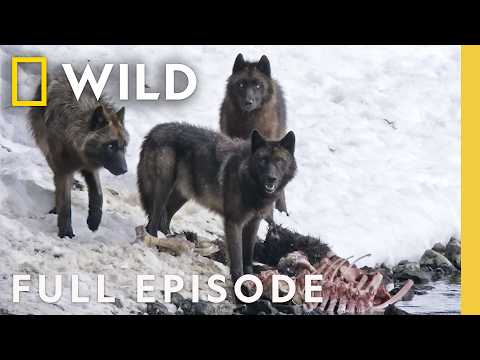
The reintroduction of wolves to Yellowstone in 1995 has transformed the park's ecosystem, restoring balance and sparking ongoing debates about wildlife management. This blog post explores the history, challenges, and successes of the Yellowstone Wolf Project, highlighting key wolves and their impact on the environment.
Wolves have long been symbols of wildness, representing the untamed spirit of nature. In North America, the eradication of wolves was seen as a necessary step to civilize the continent. However, this decision had profound ecological consequences. The reintroduction of wolves to Yellowstone National Park in 1995 marked a pivotal moment in wildlife conservation and ecosystem restoration.
In January 1995, the first 14 wolves were brought from Canada to Yellowstone after nearly 70 years without them. Doug Smith, who has been with Yellowstone's Wolf Project since its inception, recalls the uncertainty surrounding this bold move. "We didn't know if this was going to work," he said, reflecting on the nervousness and controversy that accompanied the wolves' return.
The early years of the project were fraught with challenges. The team had to ensure that each wolf was fitted with a radio collar to track their movements once released. Doug noted the pressure of this responsibility, as the survival of the project hinged on the wolves' ability to adapt to their new environment. "One animal that died, one animal that left, one animal that reproduced could make or break the whole project," he explained.
The absence of wolves in Yellowstone had disrupted the natural order, leading to an overpopulation of elk, which in turn caused severe overgrazing and ecological degradation. Doug emphasized the importance of carnivores, stating, "Carnivores for sure have these strong top-down effects. And we had lobbed off the top level."
With the reintroduction of wolves, the ecosystem began to stabilize. Elk populations were kept in check, allowing vegetation to flourish and restoring balance to the park's biodiversity. Doug remarked, "Restoring that top level has had subtle effects on everything below."
The Yellowstone Wolf Project has not only focused on the ecological impact of wolves but also on the individual stories of these remarkable animals. One of the most notable wolves was Wolf 21, a member of the Druid Peak Pack. Rick McIntyre, a researcher who has spent decades studying wolves, described Wolf 21 as "the greatest wolf who ever lived."
The Druid Peak Pack became famous for their complex social dynamics and the leadership of Wolf 21 and his mate, Wolf 40. Their story captivated researchers and visitors alike, showcasing the intricate relationships within wolf packs. The pack reached a remarkable size of 37 wolves, making it one of the largest ever recorded.
Rick shared a memorable moment when Wolf 21 joined the Druid Peak Pack, highlighting the risks involved in such a transition. "Wolves joining another pack when you're an adult is a risky undertaking. I mean you could die, so you don't do it unless you know there's a vacancy," he explained.
Another significant figure in Yellowstone's wolf history is the '06 female, a descendant of Wolf 21 and Wolf 42. Known for her independence and hunting prowess, she became a sensation in her own right. Tragically, she was legally shot by a hunter outside the park, a stark reminder of the challenges wolves face in a human-dominated landscape.
Despite the success of the reintroduction, the presence of wolves in Yellowstone remains controversial. Many ranchers express concerns about livestock safety, while wildlife advocates argue for the importance of maintaining healthy ecosystems. Doug noted, "The single most important thing behind wolf management and recovery is human attitudes."
By 2012, it became legal to hunt wolves in states bordering Yellowstone, leading to ongoing debates about wildlife management. Doug acknowledged the complexity of the situation, stating, "I think we have a saturated landscape, in other words, there's as many wolves as there can be."
The reintroduction of wolves to Yellowstone has not only restored ecological balance but has also sparked a deeper understanding of the interconnectedness of wildlife and human activity. As Doug poignantly stated, "Wolves are real, and they're wild. And you'll never get that out of a wolf. And we connect with that."
The stories of individual wolves, their struggles, and their triumphs serve as a reminder of the resilience of nature and the importance of preserving wildness in our world. The Yellowstone Wolf Project continues to be a testament to the power of conservation and the enduring spirit of the wild.



















