
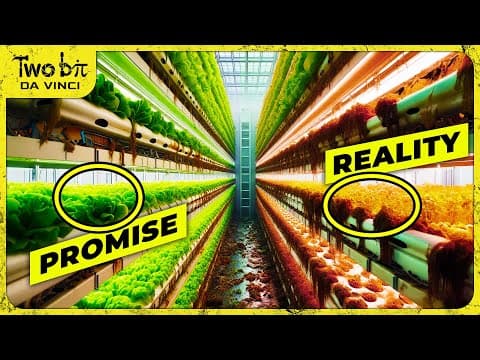
Vertical farms, once hailed as a revolutionary solution for sustainable agriculture, are facing widespread bankruptcy due to high operational costs, reliance on technology, and market competition. Despite their potential benefits, the industry struggles to remain profitable, leading to a significant decline in investment and numerous company failures.
Vertical farms were once seen as the answer to sustainable agriculture, promising to feed an ever-increasing world population with less water and more efficiency. However, as we move into 2024, the reality is starkly different, with numerous vertical farm startups filing for bankruptcy. This blog post delves into the reasons behind this unexpected downfall and what it means for the future of agriculture.
In 2022, over $2 billion was invested in vertical farms, with hundreds of startups emerging to revolutionize farming in urban areas. By 2023, the vertical farming market was valued at over $5 billion, attracting venture capital firms eager to invest in the next big agricultural innovation. The concept of vertical farming, which dates back to the mid-1990s, gained traction as more than 2,000 companies emerged in the U.S. alone, alongside many others in Europe, Asia, and the Middle East.
Vertical farming promised several advantages:
Despite the initial excitement, the vertical farming industry began to face significant challenges. By 2023, venture capital investment plummeted from $2.1 billion in the first three quarters of 2022 to just $275 million in the same period of 2023, a staggering drop of nearly 90%. This decline in funding led to a wave of bankruptcies among major players in the industry.
Several notable companies succumbed to financial pressures:
At its core, vertical farming involves growing crops in stacked trays or containers within controlled environments. Key technologies include:
Despite the technological advancements, vertical farming faces several drawbacks:
While vertical farms can yield significantly more produce per square foot compared to traditional farms, profitability remains elusive. The cost of producing lettuce in a vertical farm can reach $526 per pound, while traditional farming costs only a fraction of that. Key factors include:
Despite the current struggles, there is a silver lining. Many vertical farming companies are relocating to regions with favorable climates and renewable energy sources, such as the Middle East. This shift could enable large-scale projects like Saudi Arabia's ambitious plans.
The vertical farming industry continues to grow at a compound annual growth rate of about 25%. If companies can further automate operations and reduce costs, there may still be hope for this innovative approach to agriculture.
The vertical farming industry represents a complex interplay between technology, economics, and environmental factors. While the initial promise was compelling, the reality has proven challenging. As the industry evolves, it remains to be seen whether vertical farming can overcome its current hurdles and fulfill its potential as a sustainable solution for global food production.



















