
Mycelium, the root structure of fungi, is emerging as a sustainable alternative to traditional materials in construction, packaging, and food. Companies like Ecovative are pioneering its use in products ranging from biodegradable packaging to mycelium-based leather and plant-based bacon, showcasing its versatility and potential to replace plastics and other environmentally harmful materials.
Imagine a world where the homes we live in, the clothes we wear, and even the sensors in our electronics are not manufactured but grown. Mycelium, the root structure of fungi, is shaking up everything from sustainable construction to meatless bacon. It’s turning agricultural waste into walls, hemp into compostable packaging, and fungal threads into leather that even luxury brands are eyeing. This mushroom material is set to insulate the façade of a 300-unit housing project in California. So, how long until mycelium is just as ubiquitous as wood, metal, and plastic?
When we think of mushrooms, we often picture Portobello caps or forest fungi. However, these are just the fruiting bodies; the real magic happens underground. Beneath the soil surface, a vast network of mycelium threads acts as both roots and stomach, digesting and absorbing organic matter. These threads, called hyphae, are tubular structures that intertwine to form a lightweight, lattice-resembling foam. This ability to bind loose materials together is what first fascinated Eben Bayer and Gavin McIntyre, the duo behind the mass farming and use of mycelium as a self-assembling, sustainable material.
Bayer and McIntyre mixed mycelium with agricultural waste, such as corn stover or hemp hurds, placed it in a mold, and let nature do its thing. Fueled by plant matter, mycelium grows to fill the mold, forming an all-natural, compostable foam. This process is rapid; in just four days, a rigid mycelium structure is ready to be removed from the mold, then grown for another two days until its surface is coated with a soft, velvety layer of mycelium. After being baked at a low temperature to stop growth, it’s ready for various applications.
Ecovative’s innovations began with Mushroom Packaging, which has been used by companies like Dell and Steelcase. The mycelium-based packaging market is currently valued at nearly $85 million and is projected to grow more than 9% annually, reaching over $200 million by 2034. This growth is driven by the increasing adoption of greener packaging solutions.
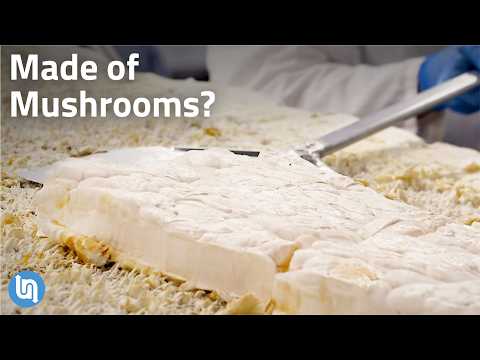
While touring massive indoor mushroom farms in the Netherlands, Bayer envisioned growing mycelium indoors as giant slabs. This led to the development of AirMycelium, a novel mushroom architecture that unlocks a new realm of material possibilities. Mycelium thrives in dark, damp environments, requiring minimal water and energy. Ecovative’s mycelium farm produces three million square feet of material each year, showcasing its efficiency and scalability.
Ecovative has also ventured into creating mycelium-based leather, known as Forager leather, which skips the harmful chemicals used in traditional tanning processes. This leather is cheaper, biodegradable, and produces half the emissions of conventional leather. Major brands like Calvin Klein and Tommy Hilfiger are already lining up to commercialize this innovative material.
In addition to leather, Ecovative has developed MyBacon, a plant-based bacon alternative made from AirMycelium. This product is already available in over 1,400 stores and is gaining popularity due to its meat-like texture and lower environmental impact compared to traditional bacon production.
Mycelium is not just limited to packaging and food. Start-ups are exploring its use in various applications, such as biodegradable coffins, acoustic wall tiles, and even furniture. An initiative called MycoHAB has built a one-bedroom home in Namibia using mycelium bricks, claiming they are stronger than concrete. In 2025, a 316-unit affordable housing complex in West Oakland, CA, will feature exterior cladding made from mycelium panels, which are carbon negative and provide excellent insulation.
NASA is even exploring the potential of using living mycelium to grow habitats on the Moon or Mars. Scientists are investigating whether astronauts could use dormant mycelium to create structures by simply adding water. On Earth, researchers at Cornell University are developing mycelium-based sensors for biohybrid robots, which could revolutionize environmental monitoring and sustainable agriculture.
Mycelium materials represent one of the most exciting advancements in sustainable technology. They have the potential to replace plastics and foams derived from petroleum, breaking down naturally and enriching the soil when they are no longer needed. This embodies the essence of a circular economy, where products are not only biodegradable but also regenerative. As mycelium continues to grow in popularity and application, it could reshape our approach to materials, food, and sustainability.
What do you think? Should we swap traditional products for mycelium alternatives? Join the conversation and share your thoughts.



















