
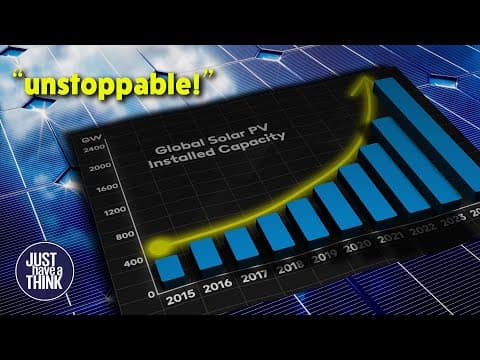
The International Energy Agency's 2024 report reveals significant growth in the solar PV sector, highlighting employment, capacity, and environmental benefits, while addressing challenges such as energy storage and recycling.
The renewable energy sector, particularly solar photovoltaics (PV), has seen remarkable advancements and growth in recent years. The International Energy Agency (IEA) has recently published its 2024 analysis of the solar PV industry, revealing astonishing statistics and projections that underscore the sector's potential.
The solar PV industry has been a focal point of innovation, with technologies ranging from perovskite multi-junction cells to transparent PV that can be integrated into windows. The IEA's report highlights the following key statistics:
China continues to dominate the market, installing more solar capacity than the next four largest markets combined. To put this into perspective, China's solar PV installations in one year exceeded the total grid capacity of the entire United Kingdom, which stands at about 75 gigawatts.
As of now, there are more than 1.64 terawatts of installed PV plants globally, with half of that capacity added in the last three years. Notably, around 700 gigawatts of this capacity is located in China. The report also examined solar PV capacity per capita, revealing that:
This data indicates significant potential for solar energy expansion in sunnier regions, suggesting that many countries have yet to fully harness their solar capabilities.
Gaëtan Masson, co-chair of the European Solar Manufacturing Council and lead author of the IEA report, emphasized the environmental benefits of solar PV technology. The current PV fleet is estimated to save around one billion tons of CO2 emissions annually. This figure is expected to grow as solar technology continues to advance.
Despite criticisms regarding the carbon footprint of solar panel production, the emissions associated with solar PV are significantly lower than those from fossil fuels. The report notes that the carbon emissions from solar production range from 20 to 50 grams of CO2 per kilowatt-hour, which is minimal compared to fossil fuel emissions.
Looking ahead, the IEA report predicts that solar PV could become the most important energy source of the century. However, several challenges must be addressed:
Intermittency of Renewable Energy: The comparison between fossil fuel baseload power and renewable energy intermittency remains a contentious issue. Countries like Australia and Spain are beginning to see solar PV meet nearly all their midday electricity needs, necessitating a reevaluation of energy usage and storage solutions.
Energy Storage Solutions: The development of battery storage technology is crucial for managing the intermittency of solar energy. Electric vehicles, with their substantial battery capacities, may serve as a significant storage solution, complementing stationary storage systems.
Recycling and End-of-Life Management: As millions of solar panels reach the end of their operational lifetimes, recycling becomes a pressing concern. While recycling technology is mature, the industry is still young, and effective recycling schemes are expected to emerge in the coming years.
The land required for solar energy generation is relatively small compared to the potential output. For instance, only about 3% of the UK’s land mass could suffice to power the entire country with solar energy. However, local social acceptance is vital. Engaging with communities and stakeholders is essential to address concerns about land use and to ensure that solar installations do not negatively impact agricultural practices.
Agri-voltaics, which allow for farming beneath solar panels, present a promising solution. Studies suggest that this approach can even benefit certain crops by providing shade, thus enhancing agricultural productivity while generating renewable energy.
The IEA's 2024 report paints a promising picture for the future of solar energy. With significant growth in capacity, employment, and environmental benefits, solar PV is poised to play a crucial role in the global energy landscape. However, addressing challenges related to energy storage, recycling, and social acceptance will be essential for realizing its full potential. As the world moves towards a more sustainable energy future, the insights from this report will be invaluable in guiding policy and investment decisions in the renewable energy sector.



















