
This article explores the earthquake risks in Fukuoka, focusing on the Nishi-Yama and Keigo fault lines, their potential impact, and the importance of building resilience through retrofitting and preparedness measures.
On January 1st, a magnitude 7.6 earthquake struck the Noto Peninsula in Ishikawa Prefecture, causing significant destruction and resulting in a tsunami. The earthquake has led to the tragic loss of 222 lives and extensive damage to buildings, including wooden houses and commercial structures. This incident raises an important question: Could a similar disaster occur in Fukuoka?
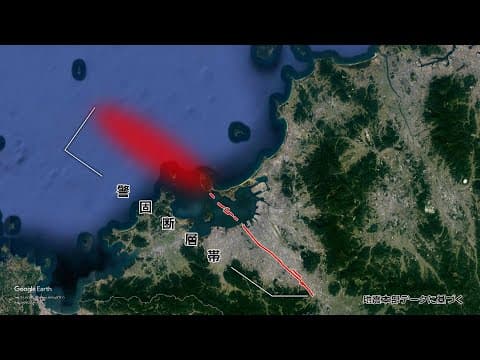
Professor Asai from Kyushu University, an expert in disaster prevention engineering, highlights two major fault lines that pose a significant risk to Fukuoka. The first is the Nishi-Yama fault, which is known for its potential to generate tsunamis. The second is the Keigo fault, which is considered to have the highest likelihood of causing severe seismic activity in the region.
The Nishi-Yama fault runs from Munakata City to Asakura City. The government’s Earthquake Headquarters predicts that an earthquake with a magnitude between 7.9 and 8.2 could occur, although the exact probability remains uncertain. If the Nishi-Yama fault were to slip entirely, it could generate a tsunami with heights estimated between 1 to 2 meters.
The Keigo fault, which stretches from the city of Fukuoka to the surrounding areas, is also a significant concern. The 2005 Fukuoka earthquake, which had a magnitude of 7.0, caused considerable damage, particularly in the western part of the city. This earthquake was triggered by movement in the northern section of the Keigo fault, while the southern section remained inactive. If the southeastern part of the Keigo fault were to move, it could result in an earthquake with a magnitude of approximately 7.2.
Professor Asai emphasizes the importance of understanding the construction standards of buildings in Fukuoka. Older wooden houses, particularly those built under the building codes of 1981 or earlier, are at a higher risk of collapse during earthquakes of magnitude 6 or higher. According to Fukuoka Prefecture, the overall seismic resilience of residential buildings in the area is at 89.6%, but this figure drops to 78.3% for wooden houses.
In light of recent seismic events, there has been an increase in inquiries regarding earthquake preparedness. Fukuoka Prefecture has established public model houses to demonstrate seismic retrofitting techniques. These demonstrations show how buildings can be reinforced to withstand earthquakes better. Techniques include adding braces, reinforcing walls with seismic panels, and using lighter materials for roofs.
While retrofitting can be costly, there are subsidies available from local governments to assist homeowners. It is crucial for residents to check the construction date of their homes and consult with architects or specialists to assess their buildings' safety.
Earthquakes can strike without warning, as evidenced by the Kumamoto earthquake in 2016, which occurred despite a low probability of occurrence. The Keigo fault has a significantly higher probability of an earthquake occurring within the next 30 years, estimated between 0.3% and 6%. This stark contrast highlights the need for residents to reconsider their preparedness strategies.
Given the potential risks associated with the Nishi-Yama and Keigo fault lines, it is imperative for Fukuoka residents to take proactive measures in assessing and improving the seismic resilience of their homes. Understanding the risks and implementing effective preparedness strategies can significantly mitigate the impact of future earthquakes.



















