
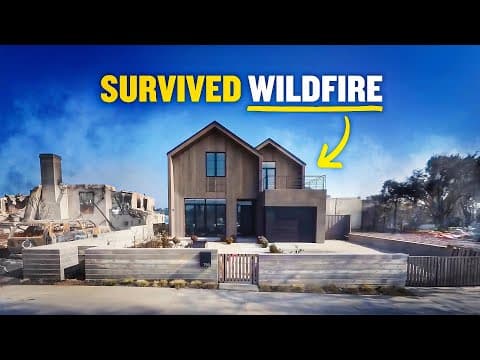
This blog post explores the unique design features of a house in Los Angeles that survived a devastating wildfire, highlighting the importance of fire-resistant architecture and community planning in wildfire-prone areas.
In the aftermath of the devastating Palisades fire in January 2025, which destroyed over 12,000 buildings and caused $250 billion in damages, one house stood remarkably unscathed amidst the charred remains of its neighborhood. This house, located in the Pacific Palisades area of Los Angeles, raises important questions about fire safety, architectural design, and community resilience in wildfire-prone regions.
The Palisades fire was fueled by extreme winds and dangerous fire behavior, creating a perilous situation for both residents and firefighters. The neighborhood, nestled between the Santa Monica Mountains, is classified as a wildland urban interface (WUI), making it particularly vulnerable to wildfires. The scenic beauty that attracted residents to this area in 1928 also contributed to its risk, as the historic homes and mature trees created a hazardous environment during the fire.
The house that survived the fire was a newly constructed 3,400 square foot, five-bedroom structure designed by architect Greg Chason. This house replaced a historic mission-style home just a year prior to the fire. While the new design may lack the charm of its predecessor, it incorporated several critical features that contributed to its survival during the wildfire.
Defensible Space: The previous house had vegetation planted right up to its walls, creating a direct path for flames. The new design eliminated this vegetation, replacing it with gravel and concrete borders to create a defensible space that prevented flames from reaching the house.
Fire-Resistant Materials: The new structure features a continuous surface without eaves, a metal roof, and fire-resistant insulation, earning it a Class A flame spread rating. This design minimizes the risk of conflagration from neighboring homes, which can ignite structures even without direct flame contact.
Sealed Structure: The new house is almost completely sealed, with minimal openings for vents and chimneys. This airtight design not only prevents embers from entering but also protects the interior from smoke damage, making it livable even after a fire.
Energy Efficiency: The thick, flame-resistant walls help maintain interior temperatures, reducing heating and cooling costs, which is an added benefit of the fire-resistant design.
While the new house's design proved effective in resisting the wildfire, it came with significant trade-offs. The aesthetic appeal of the neighborhood was compromised, and the lifestyle of the residents changed due to the sealed nature of the home, which limited the ability to enjoy the typical Southern California lifestyle of open windows and outdoor gatherings.
The survival of this house highlights the complexities of building regulations and community planning in wildfire-prone areas. Although the new structure complied with California's Chapter 7A building code for wildfire exposure, many neighboring homes did not, putting the entire community at risk. The rebuilding process after such disasters often defaults to replacing structures like-for-like, which can perpetuate vulnerabilities.
Effective wildfire resilience requires not only individual home designs but also broader infrastructure changes. This includes:
The story of the house that survived the Palisades fire raises critical questions about how communities can balance the need for safety with the desire to maintain historical aesthetics and community identity. While it is possible to design neighborhoods that are both safe and visually appealing, achieving this balance requires a collective effort from homeowners, planners, and policymakers.
As climate change continues to exacerbate wildfire risks, the lessons learned from this house's design and the broader community response will be essential in shaping future developments in wildfire-prone areas. The challenge lies in making informed decisions that prioritize safety without sacrificing the charm and character of our neighborhoods.



















