
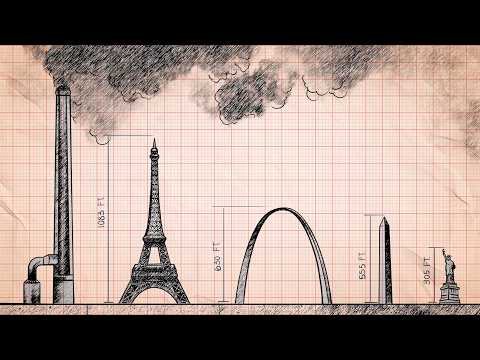
Tall smokestacks play a crucial role in managing air pollution by dispersing harmful emissions over a larger area, thus reducing their concentration at ground level. This blog post explores the engineering principles, historical context, and environmental regulations that dictate the design and height of smokestacks in industrial settings.
The towering smokestacks of industrial facilities have long been a symbol of manufacturing and energy production. But why are these structures so tall? This question delves into the complex interplay of engineering, environmental science, and public health.
The imagery of smokestacks is often associated with the industrial revolution, where factories belched smoke into the air. Initially, these stacks were not designed with air quality in mind; rather, they aimed to improve combustion efficiency in boilers and furnaces. However, as environmental regulations tightened, the focus shifted towards minimizing air pollution.
Air pollution is an inevitable byproduct of industrial processes. In the United States alone, there are approximately 200 regulated hazardous air pollutants. Industries are mandated to implement control technologies to mitigate these emissions. For instance, coal-fired power plants utilize various systems such as:
Despite these technologies, complete removal of pollutants is often unfeasible. This is where the concept of dilution comes into play. While not a global solution, local dispersion of pollutants can significantly reduce their harmful effects on human health.
Smokestacks serve a critical function in dispersing emissions. By releasing hot gases high into the atmosphere, they take advantage of the natural buoyancy of warm air, which rises due to its lower density. This principle is akin to how a pizza oven works: as the fire heats the air, the plume of smoke rises faster, allowing for better dispersion of pollutants.
The stack effect is a phenomenon where the difference in temperature between the gases inside the stack and the ambient air creates a pressure differential. This pressure difference enhances airflow, allowing contaminants to be expelled higher into the atmosphere. Engineers can manipulate two main variables:
In practical experiments, increasing the height of the stack can significantly improve airspeed and, consequently, the dispersion of pollutants. For example, a taller stack can double the airspeed of emissions compared to a shorter one.
Designing an effective smokestack is not without its challenges. Engineers must consider:
These factors complicate the prediction of how pollutants will disperse once they exit the stack. Engineers utilize sophisticated modeling software to simulate various scenarios and ensure compliance with air quality standards.
In the United States, the Environmental Protection Agency (EPA) sets national ambient air quality standards for six criteria pollutants: carbon monoxide, lead, nitrogen dioxide, ozone, particulates, and sulfur dioxide. These regulations aim to protect public health by limiting the concentration of these pollutants in the air. Engineers must design smokestacks to ensure that emissions do not exceed these limits under any conditions.
Air quality management is a multifaceted challenge. Not all pollution sources are stationary; vehicles, planes, and natural events like wildfires also contribute to air quality issues. Engineers must account for these varying sources and their impacts on local air quality.
The behavior of a plume as it rises is influenced by atmospheric stability. Factors such as temperature inversions can trap pollutants close to the ground, leading to increased concentrations in populated areas. Engineers must understand these dynamics to design effective emission control strategies.
The question of why smokestacks are so tall is not merely about aesthetics or engineering; it is a vital aspect of public health and environmental protection. As industries continue to evolve, the design and implementation of smokestacks will remain a critical focus for engineers and environmental professionals alike. By understanding the science behind these structures, we can appreciate their role in maintaining air quality and protecting human health.



















