Europe, particularly Germany's automotive sector, is facing a significant economic challenge as Chinese exports surge and competition intensifies. This 'Second China Shock' mirrors the impact China had on US manufacturing after joining the WTO in 2001, leading to job losses and industrial restructuring. German manufacturers are struggling with access to battery technology and raw materials, forcing layoffs and plant closures. European leaders acknowledge the urgent need to address this growing贸易
About two hours outside Frankfurt lies Schweinfurt, one of Bavaria's oldest towns dating back to 791. Today, Schweinfurt is a vital part of Germany's automotive industry, which is central to the country's industrial strength. German carmakers such as Mercedes, BMW, and Volkswagen are globally renowned, supported by an extensive network of parts manufacturers. One such company is the Jopp Group, headquartered near Schweinfurt.
Martin Buchs, CEO of Jopp Group, explains that approximately 80% of their business is automotive supply, providing parts directly to original equipment manufacturers (OEMs) like Audi, Mercedes, Volkswagen, and Porsche, as well as to Tier one suppliers.
Despite its prominence, the German auto industry is confronting significant headwinds. Employment in the sector has declined from over 800,000 workers in 2018 to just over 720,000 recently. The broader German manufacturing sector also saw a 2% employment decrease over the past year, with around 5.5 million people employed as of September 2025.
The rise of battery electric vehicles (BEVs), which now hold a 17% market share in Europe, has introduced new challenges. German OEMs face difficulties accessing battery technology and raw materials, areas where Chinese companies have a competitive edge. China has seen the emergence of around 100 new OEMs, intensifying competition.
Jopp Group has experienced the impact firsthand, with postponed customer programs and volume drops leading to the closure of two plants and layoffs of approximately 500 employees, reducing their workforce from 2,000 to 1,500.
This situation in Europe echoes the "China Shock" experienced by the United States after China joined the World Trade Organization (WTO) in 2001. David Autor, an MIT economics professor and co-director of the Labor Studies Program at the National Bureau of Economic Research, along with his co-authors, coined the term "China Shock" in a 2016 paper analyzing the economic impact of China's rise.
The shock displaced significant US manufacturing production, particularly in labor-intensive industries such as furniture, textiles, clothing, toys, and assembly. While the overall scale of US employment impact was moderate, the effect on specific manufacturing-intensive regions was devastating.
Autor estimates that the China Shock accounted for nearly 60% of all US manufacturing job losses between 2001 and 2019.
According to Autor, the US response to the China Shock had two major shortcomings:
Rapid Exposure Without Gradual Adjustment: The US allowed rapid market changes without gradualism. Labor markets adjust naturally at a slow rate, and sudden shocks can cause significant disruption.
Lack of Social Policies: There were insufficient social policies to support workers and communities in adjusting to the economic changes.
These factors contributed to the severe impact on manufacturing workers and regions.
Europe is now experiencing a similar phenomenon as Chinese exports to the continent surge, leading to collapsing prices in some goods and threatening European manufacturing sectors, especially automotive.
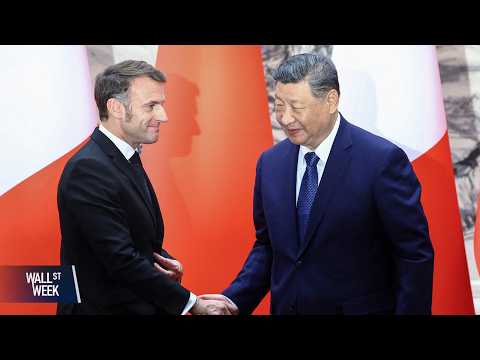
French President Emmanuel Macron has described the trade imbalance as "unbearable," while Ursula von der Leyen, President of the European Commission, stated that the EU's relationship with China has reached "an inflection point."
The rapid growth of Chinese exports to Europe risks hollowing out key manufacturing sectors, with Germany's automotive industry being particularly vulnerable.
The Second China Shock is reshaping Europe's industrial landscape, echoing the challenges faced by the US two decades ago. German manufacturers like Jopp Group are adjusting through restructuring and layoffs, while European leaders recognize the urgent need to address the growing trade imbalance and competitive pressures from China.
The situation underscores the importance of strategic responses, including gradual market adjustments and robust social policies, to mitigate the economic and social impacts of global trade shifts.