
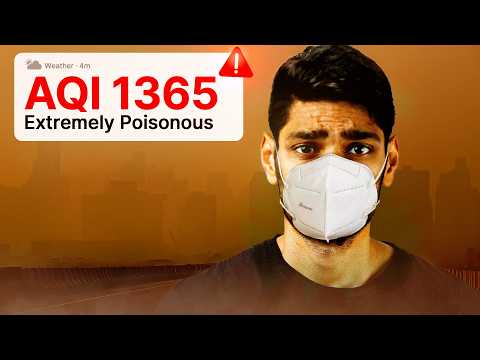
Air pollution in India, particularly in cities like Delhi, poses a severe health threat, with millions affected annually. Despite the alarming air quality levels, political inaction and public apathy hinder effective solutions. This article explores the causes, consequences, and potential solutions to combat air pollution in India.
Air pollution in India has reached alarming levels, particularly in urban areas like Delhi. This issue has become a silent killer, affecting millions of lives every year. In this blog post, we will explore the causes, consequences, and potential solutions to combat air pollution in India.
Since 2016, a terrorist group has been metaphorically destroying our country, claiming the lives of approximately 2 million Indians annually. However, this group is not armed with guns or bombs; its weapon is air pollution. The air quality in Delhi and the National Capital Region (NCR) is deteriorating day by day, with the Air Quality Index (AQI) often exceeding 500. In many areas, the visibility of iconic landmarks like the Taj Mahal is severely compromised due to smog.
Contrary to popular belief, air pollution is not just a winter issue confined to Delhi. In 2023, no city in India managed to maintain clean air for even 100 days. Many citizens mistakenly believe that an AQI of 200 is acceptable compared to Delhi's 1200, but studies show that the impact of air quality is significant even at levels between 100 and 300.
Despite the national emergency posed by air pollution, politicians and citizens alike seem unconcerned. In 2020, the Aam Aadmi Party launched a strategy to reduce stubble burning, introducing a bio-decomposer developed by the Indian Agricultural Research Institute. However, two years later, it was revealed that only a fraction of the funds allocated for this initiative was spent effectively.
The Environment Minister, Bhupendra Yadav, has remained silent on this pressing issue, and the Supreme Court has had to intervene to address pollution levels. Yet, construction activities continue unabated, contributing further to the problem.
While it is easy to blame politicians, citizens also bear responsibility. Air pollution has not been prioritized politically, and there is a lack of urgency among the public. Many individuals post AQI readings on social media but fail to take meaningful action, such as protesting or advocating for change.
Air pollution is primarily measured by particulate matter (PM), particularly PM2.5, which poses the greatest health risks. The World Health Organization recommends that PM2.5 levels should be below 15 micrograms per cubic meter, while India's national standard is set at 60 micrograms per cubic meter, four times higher than the recommended level.
Stubble Burning: A significant contributor to air pollution in North India, particularly during October and November, is stubble burning. Farmers burn crop residue to prepare their fields for the next planting season, releasing harmful pollutants into the air.
Dust and Construction: Dust from unpaved roads and construction sites contributes to 30-40% of PM2.5 pollution in cities like Delhi and Bengaluru. The lack of proper road maintenance and dust control measures exacerbates the problem.
Vehicle Emissions: Emissions from vehicles, particularly older models, contribute around 20% to air pollution. Despite regulations, enforcement remains weak, and many old vehicles continue to operate on the roads.
Industrial Emissions: Industries that burn coal or other fuels release significant amounts of pollutants. Inadequate enforcement of environmental standards leads to further deterioration of air quality.
To effectively combat air pollution, a multi-faceted approach is necessary:
Air pollution in India is a pressing health crisis that requires immediate attention and action from both the government and citizens. By understanding the causes and advocating for effective solutions, we can work towards a cleaner and healthier environment for future generations. It is time to prioritize air quality and demand accountability from our leaders to combat this silent killer effectively.



















