
Solar energy is rapidly becoming the world's leading renewable energy source, yet significant disparities exist in its distribution. High-potential regions are underutilized, while innovative solutions like solar rooftops and mini grids are emerging to address energy access challenges, particularly in developing countries.
In 2021, a pressing question emerged: Why is solar energy not everywhere yet? Experts confidently predicted that solar energy would become a dominant force in global electricity supply by 2030. Fast forward four years, and their predictions are proving accurate. With a record 16 gigawatts of solar panel capacity installed and initiatives like India’s first solar city, solar power is indeed on the rise. However, despite its rapid growth, solar energy is still not ubiquitous, particularly in regions with the highest potential.
Today, solar energy stands out as one of the most cost-effective methods for electricity generation worldwide. In the United States, the cost to produce a megawatt hour of electricity from solar farms is approximately sixty U.S. dollars, significantly lower than coal and nuclear energy. This affordability, combined with its flexibility—ranging from small panels for individual appliances to large installations for cities—has led to a global recognition of solar power's potential.
Divyam Nagpal, a renewable energy specialist at Sustainable Energy for All, notes that countries are increasingly adopting policies and targets to harness solar energy. As a result, the installed solar capacity has tripled in the past five years, with forecasts for future growth continually being revised upwards.
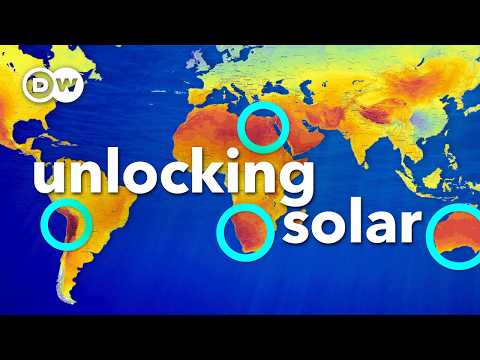
Despite the clear benefits of solar energy, a significant barrier remains: inequality in solar power distribution. A map illustrating solar potential reveals stark contrasts between countries. For instance, while countries like Sweden and the Netherlands rank low in solar potential, Australia and the United Arab Emirates are at the high end of the spectrum, boasting more sunlight hours per year.
Interestingly, many high-potential countries, such as those in Africa, have far fewer solar panels installed per person compared to countries with lower solar potential. For example, the UK has around 230 watts of solar capacity per person, while every African country has fewer solar panels per capita than the cloudy UK.
To address these disparities, some countries are taking bold steps. The United Arab Emirates has constructed one of the largest solar farms in the world, the Al Dhafra Solar Power Project, which features four million solar panels and can provide energy for approximately 200,000 people. Large solar farms are often the most cost-effective solution, but they require ample space, financial resources, and a stable electricity grid—resources that many high-potential countries lack.
Ashish Khanna, Director General of the International Solar Alliance, emphasizes that existing electrical grids were not designed to accommodate solar power, leading to challenges in energy absorption. For instance, Chile faces issues with its grid not keeping pace with the rapid development of solar farms, resulting in the wastage of nearly 20% of its renewable energy.
Fortunately, large solar farms are not the only solution. Countries like India are exploring solar rooftops, aiming for a target of 40 gigawatts of solar energy from residential installations. This approach allows individuals to generate electricity where they use it, providing benefits such as lower energy bills and reduced strain on electrical grids.
While solar rooftops can be less expensive than large solar farms, the initial investment can still be significant for homeowners. To encourage adoption, many governments offer subsidies and incentives. For example, in Germany, cities provide rebates for renters, making solar energy more accessible.
In Pakistan, the shift towards solar power has been remarkable, with solar panel imports skyrocketing from 2.8 gigawatts in 2022 to 17 gigawatts in 2024. The country now generates over 10% of its energy from solar, surpassing the global average.
In regions like Sub-Saharan Africa, where many people lack access to reliable electricity, solar power presents a crucial opportunity. Ashish Khanna's work with the World Bank Program Mission 300 aims to provide energy access to 300 million people in Sub-Saharan Africa by 2030 through initiatives like mini grids and standalone solar systems.
These solutions enable communities to bypass the lengthy process of building large infrastructure, allowing for quicker access to energy. The African Union envisions a future where mini grids and standalone systems complement existing electrical grids, ensuring energy access for all.
As the world moves towards a more sustainable energy future, solar power is poised to play a pivotal role. At the 2023 climate conference, nearly 200 countries pledged to triple renewable energy capacity by 2030, with solar power expected to account for a significant portion of these new installations. By 2030, projections suggest there could be two solar panels for every person on the planet.
The economic viability of solar power makes it an attractive option for both developed and developing nations. As solar technology continues to advance, every new installation contributes to reducing reliance on fossil fuels and improving energy independence for communities worldwide.
In conclusion, while challenges remain in the equitable distribution of solar energy, innovative solutions like solar rooftops and mini grids are paving the way for a brighter, more sustainable future. The journey towards universal energy access is underway, and solar power is at the forefront of this transformation.



















