
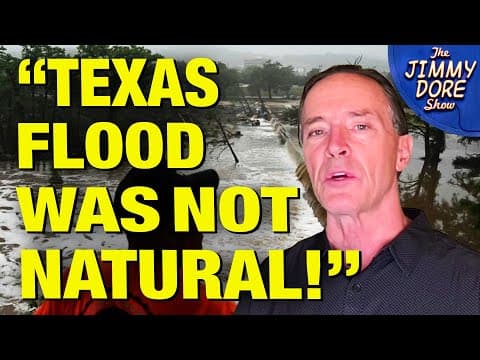
The recent floods in Texas have sparked debate over whether they were a result of artificial weather manipulation. This blog explores the claims of cloud seeding, the involvement of private companies, and the implications of weather modification technologies.
The catastrophic floods in Texas have raised significant questions about the nature of weather events and the potential for human intervention in natural disasters. Some experts argue that these floods were not merely a result of natural weather patterns but rather the outcome of engineered weather manipulation. This blog delves into the claims surrounding the Texas floods, the role of cloud seeding, and the broader implications of weather modification technologies.
Dane Wigington, a prominent figure in the discussion of climate engineering, asserts that the Texas floods were artificially engineered. He emphasizes that the mechanisms behind such weather events are not theoretical but are based on patented processes that manipulate atmospheric conditions. According to Wigington, the interaction of frequency transmissions can hold storm moisture in place, forcing it to precipitate in a specific location, which he claims occurred during the Texas floods.
A key player in this narrative is a company called Rain Maker, which reportedly conducted a cloud seeding mission just two days before the floods struck Texas. The CEO of Rain Maker, Augustus Duro, a 25-year-old entrepreneur, has been linked to Peter Thiel, a billionaire known for his controversial investments and connections to various tech ventures. Duro's company received funding from Thiel and was involved in weather modification activities in the region.
On July 2nd, Rain Maker confirmed it conducted a cloud seeding operation over K County, located southeast of the flood zone. When questioned about the potential impact of this operation on the subsequent flooding, Duro stated that their activities did not contribute to the flooding that occurred on July 4th. He claimed that their operations were regulated and that they had suspended activities in response to National Weather Service warnings.
Wigington argues that the focus on cloud seeding distracts from the more significant issue of frequency manipulation through the NEXRAD transmitter network. He claims that this technology can hold moisture in place, leading to excessive precipitation in a localized area. He cites previous events, such as Hurricane Harvey, as evidence of this phenomenon, where similar frequency manipulation was recorded.
The implications of these claims are profound. If weather manipulation technologies are indeed capable of engineering weather events, it raises ethical and regulatory questions about who controls such technologies and the potential consequences for the environment and society. Wigington warns that the lack of oversight and accountability in private weather modification operations could lead to catastrophic outcomes, as seen in the Texas floods.
There is speculation that events like the Texas floods may be used to further climate change agendas. Some theorists suggest that by creating extreme weather events, those in power can instill fear and push for more stringent climate regulations. This perspective raises concerns about the motivations behind climate change narratives and the potential for manipulation of public perception.
Beyond the immediate environmental concerns, there are health implications associated with weather modification. Wigington discusses the presence of toxic metals, such as aluminum and mercury, in the environment and their potential impact on human health. He emphasizes the importance of chelation therapy to help individuals detoxify from these harmful substances, which are increasingly found in our bodies due to various environmental factors.
The Texas floods have opened a Pandora's box of questions regarding the intersection of technology, environment, and public health. As discussions around artificial weather manipulation continue, it is crucial for individuals to stay informed and critically assess the information presented to them. The potential for weather modification to impact our lives is significant, and understanding these dynamics is essential for advocating for responsible practices and policies.
In light of these revelations, it is imperative for the public to engage in conversations about climate intervention, demand transparency from those in power, and consider the long-term implications of weather manipulation on our planet and health.



















