
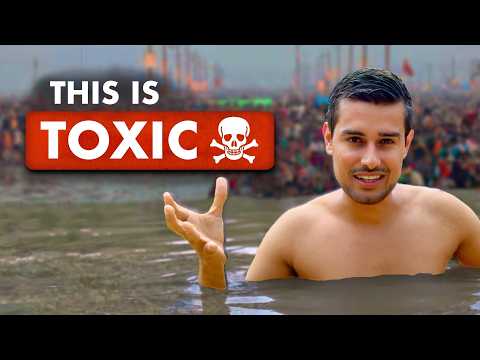
The Ganga River, revered in Hinduism, faced severe pollution during the Mahakumbh festival, with water quality tests revealing unsafe levels of contaminants, raising concerns about public health and government accountability.
In recent weeks, the Mahakumbh festival has attracted millions, being recognized as the largest human gathering in the world. According to government data, over 500 million people participated, expressing their unwavering faith by bathing in the Ganga River. However, this raises a critical question: has the government deceived the public regarding the purity of the Ganga? The Ganga River is deeply revered in Hinduism, with numerous pilgrimage sites along its banks, including Gangotri, Rishikesh, Haridwar, and Varanasi. The confluence of the Ganga and Yamuna rivers at Allahabad, now known as Prayagraj, hosted the Mahakumbh after 12 years. While millions consider the Ganga as their mother, the question remains: how polluted is the water that they bathe in?
The Central Pollution Control Board (CPCB), a government agency under the Ministry of Environment and Forests, has reported alarming levels of pollution in the Ganga during the Mahakumbh. The Biological Oxygen Demand (BOD) is a key indicator of water quality, measuring the amount of oxygen required by aerobic microorganisms to decompose organic matter in water. Ideally, drinking water should have a BOD of 0 mg/L, while water safe for bathing should be below 3 mg/L. However, on January 13, 2025, the BOD level at the Sangam was recorded at 3.94 mg/L, exceeding safe limits. This level increased to 5.09 mg/L between January 16 and 24, indicating severe pollution.
Another critical measure of water quality is the presence of fecal coliform bacteria, which indicate contamination from human and animal waste. The Ministry of Urban Development established that the desirable level of fecal coliform is 500 MPN/100 mL, with a maximum limit of 2500 MPN/100 mL for bathing water. On January 20, fecal coliform levels at the Sangam reached 49,000 MPN/100 mL, and the Yamuna River upstream recorded 33,000 MPN/100 mL. These figures starkly illustrate the unsafe conditions of the water during the festival.
Despite the alarming data, the Uttar Pradesh Pollution Control Board (UPPCB) claimed that the water was safe for bathing, providing outdated samples from before the Mahakumbh began. The National Green Tribunal (NGT) criticized the UPPCB for this misleading information, demanding recent data to substantiate their claims. The UPPCB's reports have been accused of using unscientific methods to present false information about water quality.
Bathing in such polluted water poses significant health risks, including skin diseases, gastrointestinal infections, cholera, typhoid, and hepatitis. Reports from hospitals indicate that individuals returning from the Mahakumbh experienced various medical issues, including fever and respiratory problems. While some may argue that they did not experience any adverse effects, this does not negate the potential dangers posed by contaminated water.
The government has invested heavily in the Namami Gange project, with expenditures exceeding 33,000 crores aimed at cleaning the Ganga. However, the persistent pollution levels raise questions about the effectiveness of these initiatives. Despite repeated assurances from officials, including the Chief Minister of Uttar Pradesh, the reality of the Ganga's pollution remains unaddressed.
In response to criticism, a report by scientist Dr. Ajay Sonkar claimed that the Ganga's water exhibited self-purifying properties due to the presence of bacteriophages. However, this research lacks transparency, as it has not been published in any credible journal, and its findings contradict the extensive pollution data collected by various institutions.
The situation surrounding the Ganga River during the Mahakumbh is a stark reminder of the disconnect between government claims and the reality of environmental conditions. The ongoing pollution crisis not only threatens public health but also undermines the faith of millions who revere the Ganga. It is crucial for the government to acknowledge the problem and take genuine steps towards cleaning the river rather than merely presenting a facade of cleanliness. For those wishing to experience the Ganga safely, it is advisable to visit areas like Rishikesh, where the water quality remains relatively better.
The truth about the Ganga's pollution must reach a wider audience to ensure accountability and protect public health.



















