
Islam in the Balkans has a distinct history shaped by Ottoman rule, local conversions, and cultural intermingling, resulting in a unique form of Islam that differs significantly from practices in the broader Islamic world.
The Balkans, a region known for its diverse religious landscape, has a significant Muslim population that raises questions about its origins and characteristics. This blog post explores the historical journey of Islam in the Balkans, its unique development, and how it differs from Islamic practices in other parts of the world.
Muslim minorities have existed in the Balkans since the arrival of the Turkomans, who fled the Mongol invasions. However, the significant spread of Islam began in the mid-14th century with the Ottoman conquest of Adrianople. This event marked the start of a new era in the region, allowing Islam to gain a foothold as the Ottomans expanded their empire.
The Ottoman Empire spread Islam in the Balkans through three primary methods:
Colonization: As the Ottomans conquered new territories, they brought in Muslim settlers from Anatolia to govern these lands. This established an upper Muslim ruling class alongside Turkish peasantry.
Consensual Conversion: The Ottomans offered incentives for conversion to Islam, such as lower taxes and job promotions. This created a social divide between Muslims and Christians, leading many to convert to avoid discrimination and secure better opportunities.
Forced Conversion: The Ottomans implemented a blood tax known as devshirme, where Christian families were required to surrender their sons to be raised as Muslims and trained as soldiers. This brutal method, along with forced conversions following uprisings, contributed to the mass Islamization of regions like Macedonia, Bosnia, and Albania.
At its peak, only about 20% of the Balkans identified as Muslim, while Christians made up the majority. However, the late 19th and early 20th centuries saw a reversal of this trend as independent Balkan states emerged, leading to the ethnic cleansing of many Muslims.
Islam in the Balkans developed differently than in the broader Islamic world due to the region's historical context. Many converts to Islam were not devout practitioners; instead, they became what can be termed "sociological Muslims." This meant that while they identified as Muslims, their practices often included traditional customs from their Christian heritage.
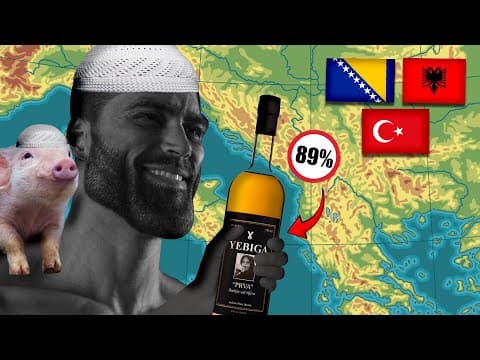
For instance, alcohol and pork, both forbidden in traditional Islamic practice, are commonly consumed by Balkan Muslims. Observations from Western travelers in the 17th and 18th centuries noted that many Muslims would cross themselves like Christians after praying, indicating a blending of religious practices.
Mixed marriages between Muslims and Christians further contributed to the unique expression of Islam in the Balkans. Prominent figures, such as Serbian despot Georg Branković, married their daughters to Muslim leaders, fostering cultural exchange. This intermingling often resulted in children being raised with both Islamic and Christian traditions.
As nationalism surged in the Balkans, previously oppressed Christians began to establish their own nations, often at the expense of the Muslim population. Muslims found themselves categorized simply as "Muslims" rather than by ethnicity, which allowed them to organize and maintain some influence in the new states.
After World War II, socialist regimes took power, leading to the closure of many Islamic institutions and a significant decline in religious practice. Albania, in particular, banned religion entirely in 1967, marking a drastic shift in the perception and practice of Islam in the region.
The collapse of communist regimes in the 1990s allowed for a resurgence of Islamic identity in the Balkans. However, this revival was often influenced by foreign Islamic actors, particularly from Saudi Arabia and Turkey. While some argue that this has led to a fundamentalist shift among the youth, others believe that the influence remains limited and that traditional Balkan practices still dominate.
Today, Balkan Muslims navigate a complex landscape where secularism and religious identity coexist. While there is a slow revival of Islamic institutions, the majority of Muslims in the region continue to identify more with cultural practices than strict religious observance.
Islam in the Balkans has evolved into a unique phenomenon, shaped by historical events, cultural intermingling, and the influence of nationalism and secularism. This distinct form of Islam continues to be a subject of interest, particularly as Western countries look to the Balkans for insights into integrating Muslim migrants. Despite the challenges and controversies faced by Muslims in the region, they have developed a rich and diverse identity that reflects their unique history and cultural heritage.



















