
The Atlantic Meridional Overturning Circulation (AMOC) is crucial for global climate stability. Recent studies suggest that the AMOC may be more unstable than previously thought, with potential consequences for weather patterns, food security, and global temperatures. Understanding past climate events can help predict future changes, emphasizing the urgent need to reduce carbon emissions to mitigate risks.
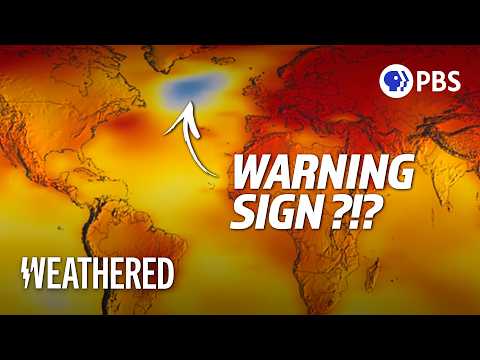
Ocean temperatures are reaching unprecedented highs, yet the North Atlantic presents a perplexing anomaly known as the "cold blob" or "warming hole." This phenomenon, which climate models suggest should not exist, raises critical questions about the stability of the Atlantic Meridional Overturning Circulation (AMOC), a vital ocean current that regulates global climate.
The AMOC is an enormous ocean circulation system that redistributes heat from the tropics and southern hemisphere to the northern latitudes. This global heat transfer is essential for maintaining weather patterns that societies depend on, particularly temperature and rainfall. The emergence of the cold blob could indicate that the AMOC is nearing a tipping point, potentially leading to catastrophic consequences.
There is an ongoing debate within the scientific community regarding the stability of the AMOC. While many scientists agree that a collapse of the AMOC would have dramatic effects on our world, opinions diverge on the immediacy and likelihood of such an event. Some studies suggest that the risk of AMOC weakening is greater and closer than previously thought, with predictions of a weakening by up to 46% by the end of the 21st century, even under low greenhouse gas emission scenarios.
The AMOC plays a crucial role in influencing rainfall and water availability. When the AMOC is strong, the northern hemisphere tropics and monsoon regions tend to be wetter. A slowdown in the AMOC could shift tropical rain bands southward, affecting regions that rely on monsoons for up to 90% of their annual precipitation. This shift could directly impact food security for over 2 billion people worldwide.
If the AMOC were to collapse, the immediate effects would include dramatic cooling in Europe and significant changes in global weather patterns. Historical data indicates that past AMOC collapses have led to temperature drops of up to 20 degrees Fahrenheit in Greenland within decades, with ripple effects felt globally. The potential for such rapid climate shifts poses a severe threat to humanity.
To understand the future of the AMOC, scientists are turning to paleo climate data, which provides insights into Earth's historical climate patterns. By analyzing ice cores and marine sediments, researchers can reconstruct past climate events and assess the stability of the AMOC.
Ice cores from Greenland, for example, reveal significant methane spikes that correlate with past AMOC collapses. These studies help scientists understand the relationship between greenhouse gases, temperature, and rainfall patterns, providing a clearer picture of how the AMOC has behaved in different climatic conditions.
Caves also serve as valuable sites for studying past hydroclimate conditions. Stalagmites, formed from dripping water, preserve a record of groundwater chemistry that reflects historical rainfall patterns. By measuring oxygen isotope ratios in these formations, scientists can identify abrupt shifts in climate that may indicate AMOC impacts.
Research indicates that during the last interglacial period, when Earth was slightly warmer than today, a cold blob similar to the current one existed. This period saw a slowdown in the AMOC, suggesting that our current trajectory of greenhouse gas emissions could lead to similar outcomes.
The findings underscore the importance of reducing carbon emissions to prevent a potential AMOC collapse. Keeping global warming below 1.5 to 2 degrees Celsius is crucial to avoid triggering tipping points that could lead to sudden and catastrophic climate changes.
The AMOC is a fundamental component of Earth's climate system, and its potential instability poses significant risks to global weather patterns, food security, and overall climate stability. While a weakening of the AMOC may be reversible, a full collapse could have lasting effects for hundreds or thousands of years. The urgency to lower carbon emissions and mitigate these risks cannot be overstated. As we continue to study the AMOC and its implications, it is essential to engage in discussions about solutions to combat climate change and protect our planet's future.



















