
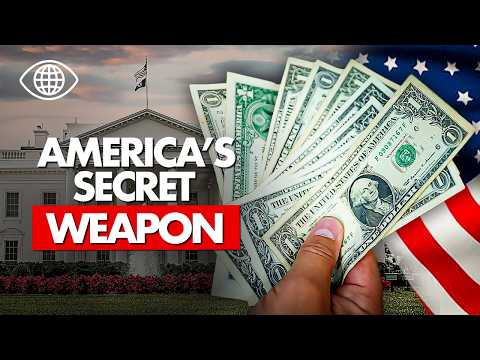
The U.S. dollar is more than just currency; it is a global symbol of economic power and influence. From its origins in the 18th century to its role as the world's reserve currency post-World War II, the dollar has shaped international finance. Despite challenges like the end of the gold standard and rising competition from the euro, the dollar remains central to global trade and politics.
The U.S. dollar is omnipresent, recognized worldwide not only as a means of payment but as a symbol of wealth and success. It is one of America's greatest brands, alongside Microsoft, General Electric, and Harvard University. This article explores the dollar's rise to global dominance, its historical evolution, and its profound influence on the world economy.
Visually, the dollar bill is instantly recognizable anywhere in the world. Psychologically, it represents enrichment and the American dream. Economically, it is the key to global commerce. The strength of the dollar reflects the strength of the U.S. economy, and fluctuations in its value can have worldwide repercussions.
The dollar's name originates from the "taler," a silver coin mined in Central Europe in the 15th century. The dollar sign ($) likely derives from the Spanish American dollar, symbolizing the unity of the two hemispheres.
After the American Revolution, the new nation faced financial challenges and issued paper currency called continental currency. George Washington's first Secretary of the Treasury, Alexander Hamilton, advocated for a centralized federal bank to issue dollars and support commerce, while Thomas Jefferson opposed it, favoring a decentralized agrarian economy.
The first Bank of the United States was established in 1791 but lacked the power to issue currency and was closed 20 years later. For much of the 19th century, the U.S. had no nationwide currency, with thousands of private banks issuing their own notes, leading to confusion and rampant counterfeiting.
During the Civil War, President Abraham Lincoln introduced the "greenback," a federal currency backed by the government, ending the era of multiple competing currencies.
Throughout the 19th and early 20th centuries, the dollar was backed by gold, meaning the government could exchange dollars for gold at a fixed rate. By 1900, the U.S. had become the world's largest economy, but the dollar was not yet a dominant international currency.
The speculative bubble of the 1920s burst in 1929, leading to the Great Depression. During this period, alternative currencies and barter systems emerged due to economic hardship.
After World War II, the Bretton Woods Conference in 1944 established the dollar as the central currency of the global financial system, pegged to gold at $35 per ounce. Other currencies were fixed relative to the dollar. This system gave the U.S. the privilege of financing its deficits with its own currency, a unique advantage.
The Marshall Plan saw the U.S. distribute dollars worldwide to aid European reconstruction. In the 1960s, the U.S. ran deficits due to investments abroad and military spending, leading to challenges in maintaining gold reserves.
In 1971, President Nixon ended the dollar's convertibility to gold, transitioning to a system of floating exchange rates determined by supply and demand. This change introduced significant volatility in the dollar's value.
The 1970s and 1980s saw dramatic fluctuations in the dollar's value, influenced by inflation, interest rates, and international agreements such as the Plaza Accord (1985) and the Louvre Accord (1987) aimed at stabilizing the currency.
The Federal Reserve (Fed) is the U.S. central bank responsible for managing monetary policy, promoting price stability, and ensuring financial system stability. Unique among central banks, the Fed is a quasi-private institution with regional banks owned by commercial banks but under strict government oversight.
The Fed oversees the production of U.S. banknotes through the Bureau of Engraving and Printing, producing billions of notes annually. Despite the rise of digital payments, physical cash remains significant in the U.S., partly due to a sizable unbanked population and the dollar's international use.
More than half of all U.S. dollar notes circulate outside the United States, serving as a store of value and emergency funds globally. The dollar's status as the world's reserve currency stems from historical agreements and its use in global trade, especially oil pricing.
The 1945 agreement between King Ibn Saud of Saudi Arabia and President Roosevelt established the dollar's dominance in the Gulf region, with oil priced in dollars and regional currencies pegged to it.
In recent decades, the dollar has faced challenges, including criticism from countries like France and Germany over U.S. monetary policy and gold reserve concerns. Some Gulf countries have begun depegging their currencies from the dollar.
The introduction of the euro has provided a potential rival to the dollar's dominance. While the euro has the potential to become a global reserve currency, it has not yet dethroned the dollar.
The dollar bill is rich in symbolism, featuring images and motifs linked to American history, Freemasonry, Christian symbolism, and Egyptology. The motto "In God We Trust" reflects the religious heritage of the American people and government.
The dollar remains central to global finance, but its future is uncertain amid geopolitical shifts and emerging economic powers. Experts predict a multipolar currency system with significant regional blocs.
Paul Volcker, former Fed chairman, suggested that while a world currency might benefit the global economy, it is unlikely to happen soon.
The U.S. dollar's journey from a revolutionary-era paper currency to the world's dominant reserve currency is a story of economic innovation, political power, and global influence. Despite challenges and competition, the dollar continues to shape international finance and remains deeply embedded in American culture and identity.
Understanding the dollar's history and role helps illuminate the complexities of the global economy and the interconnectedness of nations in today's financial system.



















