The closure of the Strait of Hormuz, a critical oil shipping lane, has caused crude oil prices to spike to $100 per barrel, triggering a global energy crisis. This unprecedented event has led to production shutdowns, supply shortages, and economic uncertainty. Experts warn of prolonged volatility and inflationary pressures, while investors adjust portfolios amid geopolitical tensions. Additionally, tech and entertainment sectors face their own challenges and opportunities.
Welcome back everyone. Today, we delve into some significant geopolitical events shaking the global economy, particularly focusing on the dramatic spike in oil prices and its far-reaching consequences.
Oil prices have surged dramatically, with crude oil reaching $94 per barrel and peaking at $100 per barrel earlier today. This sharp increase from around $70 to $100 in a short period is unprecedented and is primarily due to the effective closure of the Strait of Hormuz.
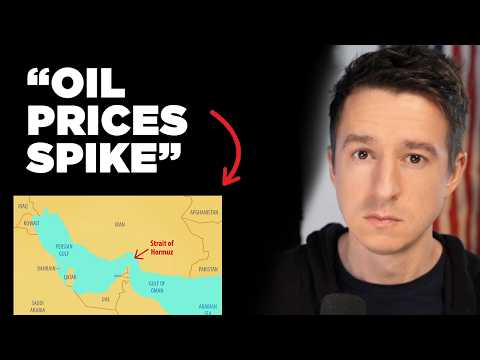
The Strait of Hormuz is a narrow passage, approximately 25 miles wide at its narrowest point, located between Oman and Iran. It serves as the only viable maritime exit for oil shipments from the Persian Gulf, a region rich in oil production.
About 20% of the world's oil supply passes through this strait daily, making it a critical chokepoint for global energy markets. Any disruption here has immediate and severe impacts on oil availability and prices worldwide.
Recently, Iran has effectively blocked passage through the Strait of Hormuz, refusing to allow oil tankers to pass. This blockade has caused a massive backlog of ships and forced oil producers in the region to shut down wells due to the inability to export their oil.
For instance, Iraq has cut its oil output by more than two-thirds, and Kuwait's storage tanks are nearing capacity. Abu Dhabi's National Oil Company has also signaled production slowdowns to avoid overflow.
This situation marks the first time in recorded history that the Strait of Hormuz has been closed, a scenario previously considered unthinkable by analysts and institutions like JP Morgan.
The closure has triggered the most severe shock to energy markets since the 1970s, causing gasoline and diesel prices to rise sharply. This energy crisis is cascading through the global economy, affecting mortgage rates, borrowing costs, and inflation.
Muhammad El-Erian, a noted economist, suggests that while markets currently expect this to be a temporary shock, the reality may be more prolonged and volatile. He highlights the compounding effects of inflation, labor market uncertainties, and financial fragility.
Energy expert Kevin Book echoes this sentiment, warning that if the blockade continues for weeks, supply shortages could significantly outpace demand, pushing prices even higher and potentially destroying demand due to unaffordability.
The geopolitical tensions and rising oil prices have led to shifts in stock market performance:
Discretionary and Travel Stocks: Companies like Texas Roadhouse, Cheesecake Factory, Booking Holdings, Expedia, and Uber have seen declines due to anticipated reductions in consumer spending and travel.
Technology Stocks: ASML has risen, benefiting from increased demand for localized chip manufacturing amid global conflicts.
Finance Sector: S&P Global and Moody's have declined, reflecting concerns over reduced market activity.
Streaming Services: Netflix, often considered a discretionary stock, is viewed as resilient during economic downturns, as consumers turn to affordable home entertainment.
The recommended investment approach is to avoid panic selling and focus on companies with strong fundamentals and long-term growth potential.
Anthropic, an AI startup, has filed a lawsuit against the Trump administration after being blacklisted and labeled a national security threat. The dispute arose over Anthropic's restrictions on the use of its AI technology for domestic surveillance and autonomous weapons, which the administration viewed as interference with military operations.
The blacklisting has jeopardized Anthropic's contracts with the federal government and private partners, threatening hundreds of millions in revenue. The company argues that it is not a supply chain risk and is seeking judicial relief to continue its business relationships.
After stepping away from a major acquisition deal, Netflix has acquired Interpositive, an AI company founded by actor Ben Affleck. This company develops AI tools specifically designed for filmmakers to enhance scenes with proprietary lighting effects and fine-tuned editing capabilities.
Ben Affleck will join Netflix as a senior adviser, strengthening the company's ties with Hollywood and advancing its technological capabilities in content production.
A lighthearted yet intriguing development is the ongoing series of burger reviews by CEOs of major fast-food chains:
The McDonald's CEO initiated the trend with a somewhat staged review of a new burger.
Wendy's and Burger King CEOs followed with their own reviews, each trying to outdo the other.
Freddy's CEO has entered the arena with the most authentic and natural reviews, frequently enjoying his own products and winning praise for his genuine approach.
This friendly rivalry has captured public attention and added a unique twist to corporate marketing.
The closure of the Strait of Hormuz represents a critical geopolitical event with profound implications for global oil markets, the economy, and investment strategies. While the situation is evolving, experts caution against underestimating the duration and impact of this crisis.
Investors are advised to remain calm, focus on long-term fundamentals, and consider opportunities arising from market volatility. Meanwhile, developments in technology and entertainment sectors continue to offer promising avenues amid uncertainty.
Stay informed and strategic as these global events unfold.