
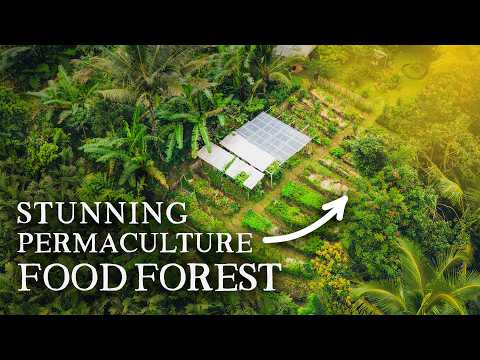
Discover how a secret food forest in Bali embodies regenerative agriculture principles to restore soil health, biodiversity, and community connection with nature. Learn about the five key principles of regenerative farming, the challenges faced due to chemical use, and inspiring stories of natural pest control and thriving ecosystems. This masterclass in abundance offers hope for a sustainable future.
Since 2017, the vision of thriving in harmony with nature has been a driving force for a passionate permaculture practitioner who embarked on a journey of learning and connection. Starting with permaculture design and centropic agroforestry courses, including studies in soil advocacy, this individual found a community of like-minded people who shared a deep love for nature and its interconnected systems.
The COVID-19 pandemic accelerated this dream, prompting a spontaneous visit to the mountains of Bali, where a profound connection with the local environment and culture was formed. This secret food forest in Bali is not just a farm but a masterclass in abundance, demonstrating how regenerative agriculture can restore natural balance and foster a thriving ecosystem.
Growing up partly on Christmas Island, surrounded by rainforest and diverse cultures, the founder developed an appreciation for nature and community. Returning to Bali in 2011 and moving there in 2013, the connection deepened, especially through the Balinese concept of "tree hitarena," which signifies a triad connection between God, humans, and nature.
Bali has faced challenges with chemical use in agriculture, including glyphosate, which has harmed farmers and the environment. This food forest aims to be an extension of the nearby rainforest, showcasing how farming can be done without harmful inputs, aligning with nature's natural regenerative energy.
The pandemic highlighted a widespread fear and a renewed interest in growing food and reconnecting with nature. The core problem addressed by this project is reminding people that modern life can coexist with thriving natural systems through regenerative agriculture.
Unlike sustainable practices that maintain the status quo, regenerative agriculture focuses on improving and enhancing the environment continuously. This approach centers on soil microbes, which are crucial for regenerating soil health and accelerating natural processes.
The food forest follows five essential principles to foster a healthy, thriving ecosystem:
Bali experiences heavy rains, strong winds, and intense sun. Covering the soil protects it from erosion and damage. Nature naturally covers bare soil quickly with fast-growing plants often labeled as weeds, which serve to protect the soil.
Keeping roots in the soil at all times provides a habitat and food source for microbes. Bare soil, even if covered, lacks the living roots necessary for microbial life. The food forest never has empty garden beds, ensuring continuous root presence.
Animals contribute by providing manure, urine, and physical disturbance through grazing, which stimulates plant growth. While cows cannot roam freely in vegetable gardens, their manure is brought in, and pruning mimics the effect of animals chewing plants. Chickens and insects also contribute to nutrient cycling.
Instead of no-dig gardening, which can be unrealistic, the farm practices least disturbance to allow microbes and mycelium fungi to establish and connect plants and nutrients. Excessive tilling harms soil biodiversity and has historically contributed to the collapse of ancient civilizations.
The farm boasts a rich variety of flowers, trees, bushes, vines, and vegetables. High biodiversity attracts diverse microbes and insects, promoting optimal plant health and resilience.
The main crop currently is salad greens, which are distributed to the local community. The farm also grows bananas, papayas, avocados, curry leaf trees, sour sop, milk fruit trees, and coconuts. Plans include expanding the centropic agroforestry system with layered forest crops integrated with chickens and cows to produce regenerative tree forest eggs.
Initially, the farm faced a caterpillar infestation on leafy greens, causing concern for the farmer, Mday Pakiwin. Instead of using organic pesticides, the decision was made to observe nature's response. Over six weeks, natural predators like wasps arrived, controlling the caterpillar population effectively. This experience highlighted the power of allowing ecosystems to rebalance themselves without chemical intervention.
The land has transformed from thick clay soil to lush, fluffy humus, rich in organic matter. The increase in insect diversity, including the arrival of praying mantises, signals a healthy ecosystem. Soil fertility is maintained by nurturing microbes through the five regenerative principles, which in turn produce nutritious and flavorful plants.
Microbes are the foundation of soil health and plant vitality. By providing what microbes need—cover, roots, organic matter, minimal disturbance, and biodiversity—the farm accelerates natural regeneration. This approach respects nature's inherent wisdom and fosters a reciprocal relationship.
The growing movement towards regenerative agriculture, supported by organizations like Carbon Cowboys and Kiss the Ground, offers hope. The innate human connection to nature positions us as guardians of the earth. By embracing regenerative practices, we can protect and thrive with nature, ensuring a sustainable and abundant future.
This secret food forest in Bali is a beacon of what is possible when we realign with nature's rhythms and principles. It demonstrates that modern life and agriculture can coexist with thriving ecosystems through regenerative methods. The story of this farm inspires us to reconnect with the earth, respect its processes, and cultivate abundance for generations to come.
Embrace the principles of regenerative agriculture and witness the transformation of land, community, and hope for a sustainable future.



















