
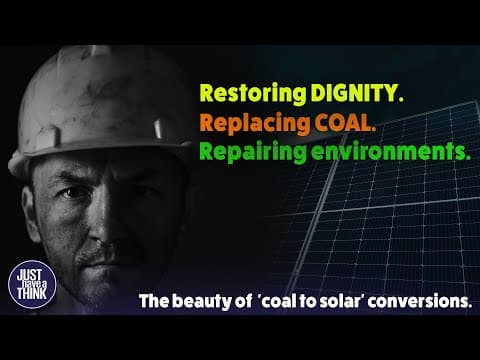
This blog explores how abandoned coal mines can be repurposed into solar parks, highlighting the potential for renewable energy generation, job creation, and environmental restoration. With significant solar capacity available at these sites, this transition could play a crucial role in combating climate change and revitalizing local economies.
In recent years, the global rise of solar power has been nothing short of remarkable. Bill McKibben, founder of the climate activism group 350.org, has been a prominent voice in advocating for climate action. His insights into the exponential growth of solar energy highlight a significant opportunity: repurposing abandoned coal mines into solar parks. This blog delves into the potential of these sites to contribute to renewable energy generation, job creation, and environmental restoration.
According to McKibben, the world reached one terawatt of installed solar power by 2022, and the next terawatt was achieved just two years later. Currently, the equivalent of one gigawatt of solar power is being installed every fifteen hours, primarily in China, which has vast areas suitable for large solar parks. However, the challenge remains: how can the rest of the world keep pace with this rapid expansion of solar technology?
In June 2025, the Global Energy Monitor (GEM) published a survey revealing the vast tracts of land left behind by abandoned coal mines. These sites, often degraded and unwanted, present an ideal opportunity for solar development. The GEM report identified over 300 decommissioned coal mines in the last five years, covering an area equivalent to Luxembourg, with the potential to support approximately 103 gigawatts of solar capacity.
The potential for solar generation at these abandoned sites is significant. In addition to the 300 identified sites, GEM found another 127 mines slated for closure soon, which could yield an additional 185 gigawatts of solar capacity by 2030. This combined capacity could meet the annual electricity consumption of a large industrial nation like Germany, representing about 15% of total global solar capacity in 2024.
GEM's data indicates that there are already 90 operational mine-to-solar conversions in China, with a capacity of 14 gigawatts. However, the potential extends beyond China. A total of 28 countries have recently abandoned coal mines, including significant closures in India, Australia, the United States, and Indonesia.
Repurposing coal mines for solar energy can transform local economies. These projects can create approximately 260,000 permanent jobs in manufacturing, wholesale trade, and distribution, along with 318,000 temporary construction jobs. This job creation could surpass the number of jobs lost in the coal industry by 2035.
One of the significant advantages of these sites is their proximity to existing grid infrastructure. GEM found that 96% of recently closed mines are within six miles of a grid connection hub, facilitating the integration of solar power into the energy system.
Repurposing old mine sites also offers substantial environmental benefits. The reclamation process stabilizes the ground, restores healthier soil layers, and reduces the risk of erosion and runoff pollution. Moreover, addressing the methane emissions from abandoned mines is crucial. These mines can leak significant amounts of methane, a potent greenhouse gas, into the atmosphere. Proper reclamation can mitigate these emissions, contributing to climate change mitigation efforts.
Transforming abandoned coal mines into solar parks presents a unique opportunity to address multiple challenges: generating renewable energy, creating jobs, and restoring the environment. While there are challenges to overcome, the potential benefits for communities and the planet are significant. As we strive for a decarbonized global energy system, repurposing these sites should be a priority. The transition to solar energy not only offers a sustainable solution but also provides hope and dignity to communities affected by the decline of the coal industry.
If you have experiences or thoughts on coal-to-solar conversions, please share them in the comments below. Together, we can explore how these initiatives can shape a cleaner, more sustainable future.



















