
The Great Green Wall initiative in Africa is a transformative land restoration project aimed at combating desertification and food insecurity. By utilizing ancient water harvesting techniques and restoring ecosystems, the project has successfully improved food production and nutrition for half a million people, showcasing a scalable solution to hunger in the Sahel region.
Welcome to one of the largest scale land restoration projects on the planet. A decade ago, many people in the Sahel region of Africa relied on food aid for survival. Today, thanks to a transformative initiative, half a million people are now able to feed themselves from restored land. This blog post explores the Great Green Wall project, its innovative techniques, and its potential to end hunger in Africa and beyond.
The Great Green Wall is a massive strip of trees being planted across Africa to combat desertification and restore ecosystems. This initiative is spearheaded by the United Nations World Food Program (WFP), which is known for its humanitarian efforts in war zones and disaster-stricken areas. The WFP is not just responding to hunger; it is addressing the underlying causes by restoring the land.
The Sahel, a semi-arid region in Africa, faces severe challenges due to desertification. The land has been transformed into a barren wasteland, making it difficult for communities to sustain themselves. However, the WFP's efforts in this region are beginning to show promising results.
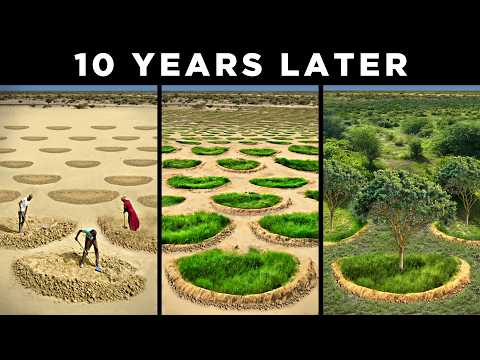
One of the key techniques used in the restoration process is the half moon water harvesting structure. This ancient method is designed to capture and store rainwater, allowing it to soak into the ground rather than running off. The half moons are laid out on contour lines and are dug to intercept water flowing downhill during heavy rains.
Inside and outside these structures, deep pits called zy pits collect organic matter, which enhances soil fertility and promotes deep water soakage. This simple yet effective design has proven to be a game changer in restoring the land.
As the restoration progresses, the land begins to flourish. Grasses and trees are planted, creating a canopy that provides shade and reduces soil erosion. The native Sahel trees produce leaves and fruits that sustain livestock, while the grasses provide essential fodder. This restoration not only improves food security but also nourishes the land that sustains the people.
To understand the full impact of the Great Green Wall, a visit to a mature restoration site near the southern border with Nigeria was essential. This area, once a barren wasteland, has undergone a dramatic transformation. Satellite images over the past seven years reveal that the area of bare soil has dropped to zero, indicating a complete recovery of the land's capacity to hold water and support biodiversity.
The chief forest ranger of the state of Niger highlighted the ripple effects of this restoration work, noting that the continuous tree canopy helps block the hot winds from the Sahara, thus reducing temperatures in the area. This transformation has created a biodiversity hotspot, attracting various species and enhancing the ecological fabric of the region.
The restoration efforts have tangible effects on local communities. In one village, a market garden has emerged, allowing residents to produce a variety of nutritious foods year-round. This has significantly improved nutrition and reduced malnutrition rates among children. Over the past five years, while three million people annually faced food insecurity, half a million have been lifted off long-term food assistance due to these resilience projects.
Despite the success of the Great Green Wall, the challenge remains to scale these efforts to address regional hunger comprehensively. The WFP, in collaboration with the government of Niger and other partners, has restored approximately 300,000 hectares of land. However, the need is vast, and the Sahel region requires a much larger scale of intervention.
The vision for the Great Green Wall extends beyond just stopping desertification; it aims to transform degraded lands into productive food baskets. The WFP supports these projects through training, resources, and funding, empowering communities to take charge of their restoration efforts. The concept of the land becoming the nourishing mother of the population is central to this vision.
The Great Green Wall initiative represents a beacon of hope for combating hunger and restoring ecosystems in Africa. By utilizing ancient techniques and fostering community involvement, this project is not only addressing immediate food needs but also rebuilding the ecological matrix of the region. As we look to the future, the collective effort to regenerate the Sahel could be a game changer in the fight against hunger, demonstrating that sustainable solutions are possible when communities are empowered to lead the way.



















