
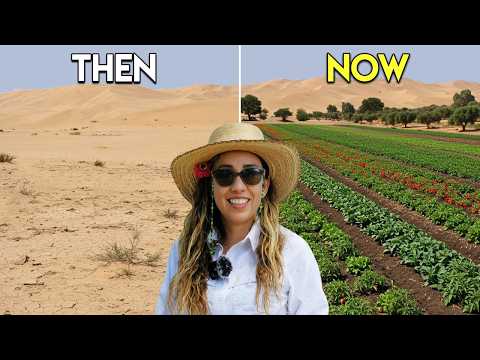
This blog post explores the remarkable transformation of desert land into fertile farmland through innovative regenerative farming techniques. It highlights the challenges of desertification, the importance of microorganisms in soil health, and the sustainable practices being implemented to grow nutritious food in arid conditions.
Planet Earth is a masterpiece of diversity, with life thriving in extreme environments from frozen poles to scorching deserts. However, deserts, characterized by their lack of rainfall, face a creeping crisis of desertification that threatens the livelihoods of millions and the health of our planet. In North America's hottest desert, a remarkable transformation is underway, turning 17,000 hectares of severely degraded land into a lush oasis.
Desert ecosystems are incredibly diverse, yet they are under threat. In the Sonoran Desert, where 90% of winter vegetables for the U.S. are grown, the paradox of desertification is evident. Once fertile soil has become barren, and hazardous farming practices have led to health crises, such as E. coli outbreaks linked to Romaine lettuce. The toxins from synthetic pesticides and fertilizers have contaminated soils, posing risks to food safety.
Despite these challenges, innovative farming techniques are being employed to regenerate the desert. Over eight years, a farm in the Sonoran Desert has transformed lifeless sand into fertile soil using cutting-edge methods that harness natural processes. Esmeralda, the regenerative agriculture manager, explains that their approach focuses on improving soil health and increasing crop yields.
The farm employs a practical agroforestry design, planting native trees between vegetable crops. These trees provide shade, retain soil moisture, and act as windbreakers, crucial in a region prone to hurricanes. This design not only enhances crop production but also supports biodiversity.
The key to their success lies in the soil. By adding organic matter and utilizing compost from animal manure, the farm has revitalized the desert sand. This process has created dark, fluffy soil capable of retaining moisture even in extreme heat. The microorganisms in the soil play a vital role in this transformation, breaking down organic matter and cycling nutrients.
Microorganisms are essential for soil health, acting as the unseen engines of ecosystems. They improve soil structure, break down pollutants, and enhance nutrient availability. The farm replicates the ideal mountain soil by incorporating microorganisms from local forests, creating a biocrust that retains moisture and reduces evaporation.
Esmeralda reveals their secret formula for soil improvement: a mixture of compost, native microorganisms, and sugars. This concoction fosters the growth of beneficial fungi and bacteria, which are then applied to the crops through an irrigation system. This method not only keeps the soil moist but also introduces probiotics that combat harmful bacteria.
The farm also focuses on seed production, cultivating 80% of the seeds used in their main farm. By selecting the best plants each season, they ensure that future crops are better adapted to the harsh desert climate. This practice enhances the resilience of their crops, making them more heat-tolerant and pest-resistant.
The innovative practices being implemented in the Sonoran Desert demonstrate that it is possible to turn barren land into productive farmland. By harnessing the power of nature and focusing on soil health, these regenerative farms are not only growing nutritious food but also greening the desert. As a result, rivers are flowing year-round, and vegetation is thriving, showcasing a sustainable future for farming in arid regions. This transformation serves as a beacon of hope in the fight against desertification and food insecurity.



















