
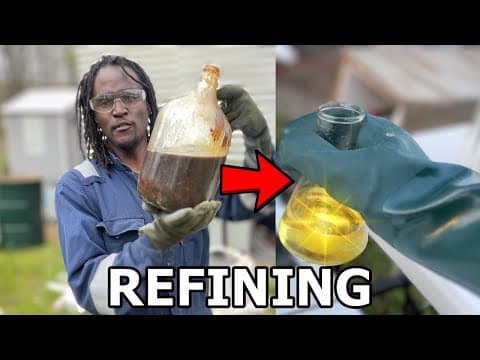
This blog post explores the innovative process of refining plastic waste into usable fuels, specifically PlastiDiesel and Plastiline, detailing the distillation process, challenges faced, and the significance of this technology in addressing plastic pollution.
Plastic waste is a significant environmental issue, polluting our oceans and landscapes. However, what if this waste could be transformed back into usable fuel? In this post, we will explore the process of refining plastic waste into two alternative fuels: PlastiDiesel and Plastiline.
Plastic is derived from petroleum, which means it can be converted back into petroleum products. This process not only helps in reducing plastic waste but also provides an alternative source of fuel. The journey begins with the creation of PlastiCrude, a crude oil-like substance obtained from plastic waste.
The initial step involves converting plastic waste into PlastiCrude using a specialized reactor. This crude oil is a dark, viscous mixture of various hydrocarbons, both short and long-chain. The goal is to refine this mixture into specific fuel fractions that can serve as alternatives to gasoline, diesel, and jet fuel.
The distillation process is crucial for separating the different fractions of fuel. A fractional distiller is used, which consists of a packed column filled with copper mesh and steel wool. This setup increases the surface area for better separation of vapors as they rise through the column. The vapors are then condensed back into liquid form, resulting in the desired fuel products.
To initiate the distillation, the PlastiCrude is heated using propane. Although the ideal method would involve using natural gas produced from the plastic itself, challenges sometimes arise, necessitating the use of propane. The heating process causes the PlastiCrude to vaporize, allowing the lighter fractions to rise and be collected.
As the distillation progresses, different fractions are collected at various temperatures. PlastiDiesel, which has a higher boiling point, is collected separately from Plastiline, which is a gasoline alternative. The process requires careful monitoring of temperatures to ensure the correct fractions are obtained.
Throughout the distillation process, several challenges can arise. For instance, the initial vapors may contain impurities, and the equipment can become clogged with waxy substances formed during the heating process. Additionally, maintaining a consistent heat source is vital to prevent mixing of the oils and ensure a clean separation of the fuel products.
The ability to convert plastic waste into fuel has significant implications for both the environment and energy sustainability. By refining plastic waste, we can reduce pollution and create a renewable source of energy. This technology not only addresses the pressing issue of plastic waste but also contributes to a more sustainable future.
The journey from PlastiCrude to PlastiDiesel and Plastiline is a testament to innovation in waste management and energy production. As we continue to refine this process and overcome challenges, the potential for transforming plastic waste into valuable resources becomes increasingly viable. This technology represents a crucial step towards a cleaner, more sustainable planet.



















