
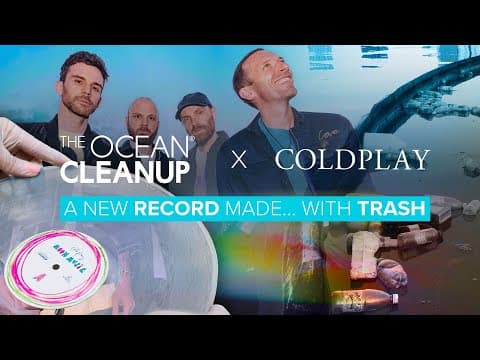
Coldplay's latest album, made from recycled plastic collected from Guatemalan rivers, showcases a groundbreaking collaboration with The Ocean Cleanup, turning environmental waste into high-quality music records.
In a remarkable fusion of music and environmental sustainability, Coldplay has announced their new album, "Moon Music," which features a special edition vinyl made from recycled plastic bottles collected from the rivers of Guatemala. This initiative not only highlights the potential of upcycling waste but also emphasizes the importance of addressing plastic pollution in our oceans and waterways.
The concept of creating a record from plastic waste may seem far-fetched, but it is a testament to human ingenuity and the power of collaboration. The project was spearheaded by Esther F. Loone, the Riverways Valorization Manager at The Ocean Cleanup. She explained that the journey began with the need for high-quality PET (polyethylene terephthalate) plastic, which is essential for producing sound without distortion.
Esther shared her excitement about the project, stating, "Who could have expected that we would be working with one of the biggest bands in the world, going from something so ugly to music?" This transformation from pollution to art is indeed special and serves as an inspiration for future eco-friendly initiatives.
The Ocean Cleanup has been actively involved in removing plastic waste from rivers since its inception. Their interceptors collect debris from waterways, which is then sorted and processed. In Guatemala, the team faced challenges due to the condition of the waste, as many bottles were scratched and dirty, making it difficult to obtain the transparent PET needed for high-quality records.
Esther explained, "When I was in Guatemala and I saw the condition of the waste, I didn't really expect that we would have enough high-quality material to be able to make these records." However, through careful sorting and processing, they were able to extract the necessary materials.
The collaboration between Coldplay and The Ocean Cleanup began in 2018 when Chris Martin, the band's lead vocalist, expressed his dream of creating a music record from ocean plastic. After several discussions and initial experiments, the team decided to focus on river waste, leading them to Guatemala, where they found a significant amount of PET plastic.
Chris Martin reflected on the journey, stating, "We kept talking about it and finally we decided, okay, let's just give it a try and see where we can actually do it." This determination led to the successful creation of the eco-record, which blends 70% river plastic with 30% traditional recycled plastic.
The project faced numerous challenges, including the need for high-quality material and the unpredictability of weather conditions. During the rainy season, the team experienced delays due to a lack of rainfall, which hindered their ability to collect plastic. However, a flash flood eventually provided a significant amount of floating debris, allowing them to harvest over 200 trucks of waste in a single day.
Esther noted, "It was a huge relief. We were working against the clock and had a deadline, but we were optimistic about the material we could collect." The team worked tirelessly to ensure that the plastic was clean and suitable for production, as any impurities could affect the sound quality of the records.
The moment of truth came when the first test pressing of the record was played. The team held their breath as they listened for any background noise. To their delight, the record produced a clear sound, confirming that their efforts had paid off. "If you would drop a pin, you would hear it. Thank God, it worked!" Esther exclaimed, celebrating this milestone.
This project is not just about creating music; it is a call to action for a circular economy. By transforming waste into valuable products, Coldplay and The Ocean Cleanup are setting an example for others to follow. Esther expressed her hope that this initiative would inspire others to consider how they can contribute to reducing plastic pollution.
Coldplay's eco-record is a groundbreaking achievement that showcases the potential of recycling and upcycling in the fight against plastic pollution. By turning river waste into music, they are not only creating art but also raising awareness about the importance of protecting our environment. As we listen to the melodies of "Moon Music," we are reminded of the journey from trash to treasure and the collective responsibility we share in preserving our planet for future generations.



















