
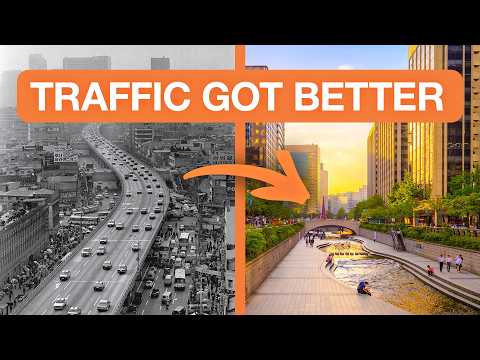
Seoul's Cheonggyecheon project transformed a congested elevated highway into a vibrant river park, significantly improving urban life, reducing traffic, and enhancing the environment, demonstrating the benefits of prioritizing people over cars in city planning.
In the mid-20th century, Seoul, like many rapidly modernizing cities, built an elevated highway through its downtown area. This decision, influenced by American urban planning ideals, was made during a time when cars were seen as the future of transportation. However, as the decades passed, the consequences of this choice became evident. The highway led to severe traffic congestion, pollution, and a significant decline in the downtown population and businesses.
By the 1990s, downtown Seoul was struggling. The area around the highway became known for its unpleasant environment, leading to a 50% drop in the population and a 20% decrease in businesses. The freeway itself was deteriorating and unsafe, prompting city officials to consider whether to rebuild or remove it. Ultimately, they made the pivotal decision to tear it down.
Instead of simply removing the highway, the city transformed it into the Cheonggyecheon stream, a beautiful linear park that has since become a major attraction. This project is often discussed in the context of induced demand and traffic evaporation. Induced demand refers to the phenomenon where building more roads leads to increased traffic, while traffic evaporation suggests that removing roads can actually improve traffic conditions.
Before the highway's removal, many predicted a traffic disaster. However, the opposite occurred. Within three years of the Cheonggyecheon expressway's removal, motor vehicle traffic decreased by 45%, while metro ridership increased by 3% and bus ridership by 15%. Remarkably, there was no increase in travel time for drivers. This outcome validated decades of urban planning research and showcased the potential benefits of prioritizing pedestrian-friendly spaces.
The Cheonggyecheon project did more than just alleviate traffic; it revitalized downtown Seoul. The area saw a significant increase in foot traffic, a reduction in air and noise pollution, and a boost in business activity. Nitrogen dioxide levels dropped by 35%, and average summer temperatures decreased by 3.5 degrees compared to neighboring streets. Wildlife diversity flourished, and the stream became one of the city's top tourist destinations.
Interestingly, Cheonggyecheon was originally a river before it was covered by the highway. The project can be seen as a return to the area’s historical roots. In the 1950s, the river was heavily polluted and prone to flooding, leading to the decision to replace it with a modern expressway. However, the transformation back into a stream has restored its ecological and cultural significance.
During a visit to Cheonggyecheon, one can experience the vibrant atmosphere created by the project. The stream features outdoor libraries, art installations, and various seating areas that encourage people to enjoy the space. The design incorporates natural elements, making it feel like a serene escape from the bustling city.
The stream is equipped with sophisticated water management infrastructure to handle heavy rainfall, ensuring that it can manage flood events effectively. While the project has been largely successful, some criticisms have been raised regarding accessibility, as the stream is sunken below street level, making it less connected to surrounding neighborhoods.
Following the success of Cheonggyecheon, Seoul has continued to reclaim urban spaces from cars. One notable project is Seoullo 7017, an elevated walkway built on a former highway. This project connects neighborhoods to the central Seoul station and features greenery, rest areas, and public art, enhancing the urban experience.
Seoullo 7017 has transformed the area around Seoul station, which was previously cut off by the highway. The walkway not only facilitates pedestrian movement but also contributes to the revitalization of local businesses. The design includes thoughtful elements such as shaded areas, seating, and even a communal foot-soaking pool, making it a pleasant space for residents and visitors alike.
The transformation of Seoul's urban landscape through projects like Cheonggyecheon and Seoullo 7017 illustrates the profound impact of prioritizing people over cars in city planning. These projects have not only improved traffic conditions but have also enhanced the quality of life for residents, demonstrating that urban spaces can be designed for people, fostering community and environmental health.
As cities around the world grapple with the challenges of car-centric infrastructure, Seoul serves as a model for how to reclaim urban spaces and create vibrant, livable environments. The success of these projects highlights the importance of innovative urban planning that focuses on enhancing the human experience in cities.



















