
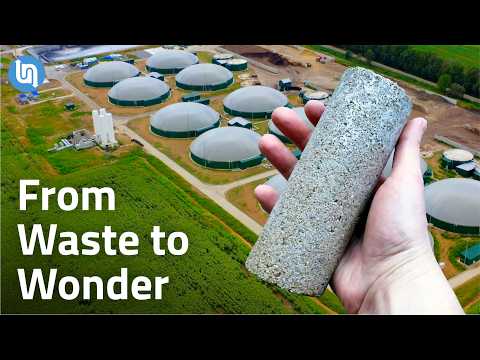
This blog explores innovative uses of cow dung and urine in creating biodegradable plastics, sustainable batteries, and eco-friendly construction materials. Researchers are turning waste into valuable resources, contributing to a circular economy and reducing environmental impact.
When we think of the circular economy, we often envision recycling processes that involve metals, textiles, and biogas from agricultural waste. However, a new frontier is emerging where cow manure is being repurposed into high-tech biodegradable plastics and even used in lithium battery electrodes. This blog delves into the innovative ways researchers are transforming waste into valuable resources, paving the way for a cleaner, greener future.
Traditionally, waste has been viewed as a problem, but engineers are now finding ways to turn waste streams into profit. Cow manure, often seen as a nuisance, is being recognized for its potential in creating sustainable products. This shift raises the question: can we truly build a cleaner future from human and animal waste?
Historically, humans have utilized waste in various ways. In the 1800s, for instance, mixing urine and manure was a common method to extract saltpeter for gunpowder. Today, however, the compost pile has been replaced by chemical plants that produce nitrates and ammonia through energy-intensive processes. In the U.S., less than 8% of cropland received manure in 2020, as chemical fertilizers are cheaper and easier to apply. This has led to the accumulation of 1.4 billion tons of cow manure annually, which often releases harmful pollutants into the environment.
What if cow manure could replace petrochemicals in plastics and textiles? Plastics are essentially polymers made from carbon-based molecules, and cellulose, a major component of cow dung, is the most abundant natural polymer on Earth. Cellulose forms the structural backbone of plants and has been used in various applications, from food packaging to medical supplies. Unlike traditional plastics, cellulose is biodegradable, making it an attractive alternative.
Currently, over 200 million metric tons of wood are pulped each year to extract cellulose, contributing to deforestation and pollution. The conventional pulping process is energy-intensive and generates significant waste. However, researchers are exploring ways to extract cellulose from cow manure, which could mitigate these environmental impacts.
Researchers at University College London and Edinburgh Napier University have developed a method to extract cellulose nanofibers from cow dung. By mixing sodium hydroxide and sodium hypochlorite with powdered manure, they strip away unwanted materials, leaving behind cellulose. This cellulose can then be spun into bioplastics using a novel technique called nozzle-pressurized spinning (NPS). This method allows for the production of various forms of cellulose, from thin films to fibers, without the need for traditional pulping processes.
The use of cow dung for bioplastics not only reduces the need for tree pulping but also saves energy and chemicals, making the production process cleaner and more cost-effective. These biodegradable plastics could revolutionize the industry, providing a sustainable alternative to conventional plastics.
Cow dung is also making waves in the battery industry. Evermore Technologies has developed a binder for silicon-carbon anodes in lithium-ion batteries using cow dung. This dung-based binder is flexible and strong, accommodating the expansion of silicon during charging. By sourcing materials from waste, Evermore aims to reduce emissions and costs while maintaining high battery performance.
Initial tests show that these dung-based batteries have a Coulombic efficiency of over 92% and retain more than 95% capacity after 500 cycles. With a specific capacity of 1500 mAh/g, these batteries could soon be used in drones and other applications.
The construction industry is another area where waste can be transformed into valuable resources. Traditional concrete production is responsible for about 8% of global carbon emissions. Researchers are exploring ways to create concrete using microbes, a process known as microbially-induced calcium carbonate precipitation (MICP). This method sequesters carbon dioxide and avoids the energy-intensive processes associated with cement production.
At the University of Stuttgart, researchers have utilized urine as a key ingredient in their MICP process. Ureolytic bacteria break down urea in urine, facilitating the formation of calcium carbonate crystals. By optimizing the mixture of sand and calcium, they have created strong bio-cement bricks. While the strength of these bricks varies depending on the source of urea, the potential for using urine in construction is promising.
As we explore these innovative uses of cow dung and urine, it becomes clear that waste can be re-engineered into valuable resources. This shift not only contributes to a circular economy but also addresses pressing environmental issues. The potential for transforming waste into sustainable materials is vast, and as research continues, we may see even more groundbreaking applications.
The idea of utilizing cow dung and urine in manufacturing processes may seem unconventional, but it represents a significant step towards sustainability. As researchers continue to innovate, the possibilities for waste-to-resource technologies are expanding. What do you think about these developments? Are they a viable solution for a greener future? Join the conversation and share your thoughts on this exciting topic.



















