
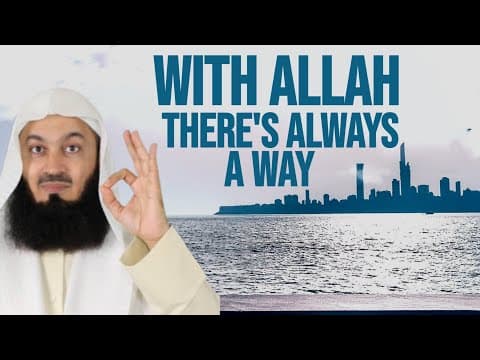
This blog post explores the significance of turning to Allah during times of illness and hardship, emphasizing the balance between taking action and placing trust in Allah. It highlights the importance of spiritual well-being alongside physical health and encourages believers to integrate their faith into every aspect of their lives, especially during challenging times.
In moments of illness or calamity, many people instinctively reach for medication or seek professional help. However, as Mufti Menk emphasizes, the first step should always be to turn to Allah. This blog post delves into the importance of integrating faith into our responses to life's challenges, highlighting the balance between taking action and placing trust in Allah.
When a person falls ill, the immediate reaction is often to self-medicate or consult a doctor. This is a natural response, as reassurance from a medical professional can provide comfort. However, Mufti Menk reminds us that the true remedy begins with turning to Allah.
Many people overlook the spiritual aspect of healing. While medical treatment is essential, it is equally important to maintain a strong connection with Allah. The believer understands that true healing encompasses both physical and spiritual well-being.
In our daily prayers, we repeatedly affirm our reliance on Allah. When calamity strikes, it is crucial to remember that Allah is the ultimate source of help and healing. By placing Allah at the forefront of our actions, we invite His blessings into our lives.
Turning to Allah not only provides spiritual comfort but also has psychological benefits. When we make dua (supplication) and seek Allah's help, we often feel a sense of relief and reassurance, which can positively influence our overall well-being.
While faith is vital, it must be accompanied by action. Mufti Menk emphasizes that believers should strive to do what is within their capacity to achieve their goals. For instance, if one is seeking employment, it is essential to actively search for a job while simultaneously making dua for guidance and success.
There are two extremes to avoid:
During difficult times, making dua is crucial. It is a means of connecting with Allah and seeking His assistance. Mufti Menk highlights that the angels are waiting for us to make good supplications, especially during moments of calamity.
Engaging in the remembrance of Allah, such as reciting the Quran or performing Salah (prayer), can provide comfort and strength. Mufti Menk shares a personal account of someone who found relief from illness through the recitation of Surah Al-Baqarah, illustrating the profound impact of faith on healing.
Life is inherently a test, and calamities are part of that test. Mufti Menk encourages believers to view challenges as opportunities for growth and spiritual development. When faced with adversity, it is essential to remain patient and trust in Allah's wisdom.
For a believer, death is not an end but a transition to a better existence. Mufti Menk reminds us that the ultimate reward for a true believer is found in the afterlife, where they will be reunited with Allah.
In conclusion, Mufti Menk's lecture serves as a powerful reminder of the importance of integrating faith into our daily lives, especially during times of hardship. By turning to Allah, balancing action with trust, and maintaining a strong spiritual connection, we can navigate life's challenges with grace and resilience. Remember, Allah's promises never fail, and with Him, there is always a way forward.



















