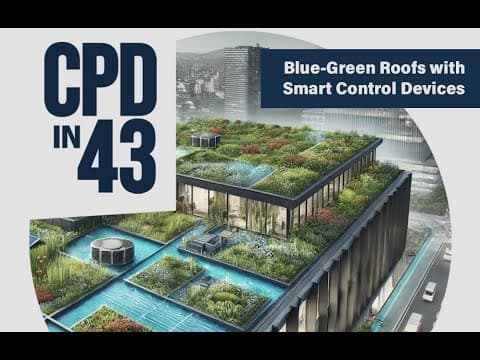
In the final episode of CPD in 43 for 2024, we delve into the innovative world of blue green roofs, presented by Sheamus Farrell from Moy Materials. This session aims to provide architects and designers with essential guidance on designing and planning blue green roofs, which integrate both water management and vegetation.
What is a Blue Green Roof?
A blue green roof combines the functionalities of a blue roof and a green roof:
- Blue Roof: Designed to provide temporary water storage and release it over a period of time, typically between 24 to 48 hours.
- Green Roof: Features a vegetative layer that can include various types of plants, from extensive sedum blankets to shrubs and trees.
Components of a Blue Green Roof
The structure of a blue green roof consists of several layers:
- Vegetation Layer: The top layer, which can include various plant types.
- Growing Medium: The soil layer that supports plant growth.
- Filtration Layer: Prevents sediment from clogging the drainage system.
- Drainage and Reservoir Board: Manages water retention and drainage.
- Protection Layer: Safeguards the waterproofing membrane from mechanical damage.
- Waterproofing Membrane: Typically an anti-root membrane to prevent damage from plant roots.
- Insulation and Vapor Control Layer: Ensures thermal performance and moisture control.
Design Considerations for Blue Green Roofs
Key Terminology
Understanding the terminology is crucial for effective design:
- Hydraulic Max (H Max): The maximum water level within the void former.
- Design Storm: A specific rainfall event defined by statistical likelihood.
- Return Period: Estimates the likelihood of a specific rainfall event occurring within a given timeframe.
- Allowable Discharge: The rate of outflow from the site, typically defined in liters per second.
Benefits of Blue Green Roofs
Blue green roofs offer numerous advantages:
- Flood Mitigation: They reduce the impact of pluvial flooding by slowly draining stormwater.
- Water Quality Improvement: They help reduce pollution in urban waterways caused by combined sewer overflows.
- Biodiversity Promotion: They support various plant species and wildlife, enhancing urban biodiversity.
- Urban Heat Island Effect Reduction: They help cool urban areas, reducing energy costs for cooling.
- Aesthetic Appeal: They provide green spaces in urban environments, improving visual appeal.
Waterproofing Systems
Selecting the right waterproofing system is critical:
- Modified Bitumen Systems: Commonly specified due to their robustness.
- Single Ply Membranes: Can be used but require careful specification.
- Hot Melt Systems: Suitable for areas with high traffic, such as podium decks.
Types of Green Roof Finishes
There are two main types of green roofs:
- Extensive Green Roofs: Low maintenance, lightweight, and typically used for aesthetic purposes.
- Intensive Green Roofs: Require deeper soil layers and support more diverse plant life, often designed for public access.
Maintenance Requirements
Maintaining blue green roofs is essential for their longevity:
- Watering: Regular watering is necessary, especially for extensive green roofs.
- Access and Traffic Management: Protect the waterproofing during installation and maintenance.
- Blockage Prevention: Regularly check and clear outlets to prevent flooding.
- Regular Inspections: Conduct inspections after storms to ensure the system is functioning properly.
Conclusion
Blue green roofs represent a sustainable solution for urban environments, combining water management with green spaces. The successful implementation of these systems requires collaboration among architects, engineers, and suppliers to ensure that each project meets its intended goals. By understanding the technology, benefits, and design considerations, stakeholders can contribute to creating more resilient and sustainable urban landscapes.