
This blog post explores the concept of carbon credits, their global mechanisms, and the specific challenges faced in India. It discusses the types of carbon markets, the criteria for generating credits, and real-life case studies that highlight the complexities and pitfalls of carbon offset projects, particularly in the Indian context.
Carbon credits and offsets have become pivotal in the global effort to combat climate change. This blog post aims to explain the carbon credit mechanism, its global usage, particularly in India, and critically examine its implications through real-life case studies.
A carbon credit is a certificate that represents the avoidance or removal of one ton of carbon dioxide from the atmosphere. These credits can be traded, allowing companies or countries that emit carbon to offset their emissions by investing in projects that reduce emissions elsewhere. This trading gives rise to two types of carbon markets:
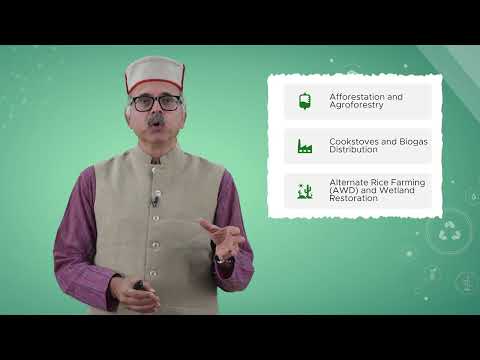
Projects that typically earn carbon credits include:
For a project to generate carbon credits, it must meet several conditions:
Projects are typically certified by international registries like Vera or Gold Standard, and credits are sold through brokers or platforms. The underlying logic is straightforward: emit here, offset there. However, this model has sparked significant debate.
Carbon markets have evolved globally from early cap-and-trade systems in the United States to contemporary discussions on carbon pricing. While these markets promise to put a price on pollution, their effectiveness hinges on several factors:
As of 2021, the global voluntary carbon market was valued at approximately $2 billion, with projections to grow to $50 to $100 billion by 2030. The market is dominated by projects in forestry, land use, biogas, and renewable energy. Carbon credit prices vary widely, ranging from $2 to $30 per ton, often with unclear quality and certification.
Over 170 countries engage in some form of carbon trading or carbon tax. India has emerged as a significant supplier of carbon credits in voluntary markets, with over 1,700 projects registered under international mechanisms like Vera and Gold Standard.
India is developing its own carbon credit trading scheme (CCTS) under the Energy Conservation Act of 2022. This scheme aims to formalize a domestic market, focusing on projects such as:
As of January 2024, countries with functioning emission trading systems include the European Union, China, Canada, South Korea, and parts of the United States. India is among the nations developing a carbon market, indicated by its participation in the CCTS.
A comparison of carbon trading systems in the European Union, Korea, China, and India reveals significant differences in scale, pricing, and enforcement:
Critics argue that many carbon offset projects overstate their impact, utilize unverified baselines, and are susceptible to greenwashing. Reports in 2023 indicated that 90% of Vera-certified forest offsets had no meaningful climate impact, yet were sold to major corporations like Disney, Shell, and Gucci.
Investigations by Down to Earth magazine have highlighted several case studies of carbon offset projects in India:
These cases illustrate the misuse of measurement tools and unchecked power dynamics, where farmers do the work while companies reap the profits.
India's upcoming carbon credit trading scheme raises several questions:
The critical question remains: Can carbon credits be designed not just for climate mitigation but also for equity and justice?
Carbon credits present both potential and pitfalls as market-based sustainability tools. To ensure these systems work fairly, especially in rural India, there is a pressing need for better accounting, improved contracts, and enhanced local governance. The future of carbon credits hinges on addressing these challenges to create a more equitable and effective framework for combating climate change.



















