
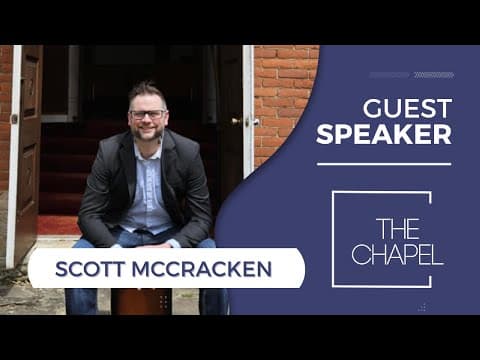
Pastor Scott McCracken shares insights on the nature of deception, drawing from Genesis and personal experiences. He emphasizes the importance of understanding our identity in Christ, the power of prayer, community, and scripture in resisting the enemy's influence. The message encourages believers to recognize subtle manipulations that can lead them away from God and to reaffirm their faith through prayer, church attendance, and reading the Bible.
Welcome to The Chapel! This morning, we are blessed to gather together in worship and fellowship. Today, we have the privilege of hearing from Pastor Scott McCracken, who will share a powerful message about the nature of deception and our relationship with God.
Before diving into the message, Pastor Scott highlights an upcoming event at The Chapel. On the 26th at 3 p.m., there will be a family fun day on the ball fields, combining the Bloom women's ministry and the Forged men's ministry. Everyone is invited to join for games, activities, food, and fellowship. It’s a great opportunity to build community and strengthen our faith together.
Pastor Scott begins with a reading from Genesis 3:1-3, where the serpent deceives Eve, leading to the fall of man. This scripture sets the stage for understanding how deception can infiltrate our lives, even when we are in close communion with God.
Pastor Scott reflects on the ease with which Eve was deceived by the serpent. Despite her direct relationship with God, she was led astray by a simple question: "Did God really say...?" This moment of doubt opened the door to sin entering the world.
Scott shares his journey of moving from Oregon to West Virginia, emphasizing that it was a calling from God that brought him here. He acknowledges the challenges of understanding God’s purpose and the importance of saying "yes" to His calling.
Drawing from his experience in sales, Pastor Scott discusses various techniques that salespeople use to build trust and influence decisions. He outlines four key strategies:
Scott uses these techniques as a metaphor for how the enemy operates, subtly leading us away from God’s truth.
Pastor Scott delves into the Hebrew names for God, contrasting "Elohim" (the Creator) with "Yahweh" (the personal God). This distinction is crucial in understanding our relationship with God. While Elohim emphasizes His power, Yahweh highlights His desire for a personal connection with us.
In Genesis 3, the serpent refers to God as Elohim, which shifts Eve’s perception of God from a personal relationship to a distant creator. This manipulation leads to her deception and the subsequent fall into sin. Scott emphasizes that the enemy’s tactics have not changed; he continues to distort our understanding of God to create distance in our relationship with Him.
Scott encourages the congregation to be aware of the subtle ways the enemy tries to deceive us today. He emphasizes that the enemy seeks to manipulate our thoughts and beliefs, leading us to focus on our shortcomings rather than our identity in Christ.
The message stresses the importance of knowing who we are in Christ. Scott shares that many people struggle with feelings of inadequacy, anxiety, and depression, which can lead to a distorted self-image. He reminds us that our identity should be rooted in what God says about us, not in the lies of the enemy.
Pastor Scott concludes with three practical steps to help resist the influence of the enemy:
As the message wraps up, Pastor Scott invites everyone to reflect on their relationship with God and to seek His truth in their lives. He encourages the congregation to come forward for prayer, emphasizing that God is always ready to welcome us back into His presence.
Let us remember that while the enemy may try to deceive us, we have the power of prayer, community, and scripture to guide us back to the truth of who we are in Christ. Amen.



















