
This article explores the characteristics of hazardous waste, including flammability, corrosivity, reactivity, and toxicity. It discusses the procedures for disposal, recycling, and transboundary movement of hazardous waste, emphasizing the importance of proper management to protect human health and the environment.
Hazardous waste poses significant risks to both human health and the environment. Understanding its characteristics and the proper disposal methods is crucial for effective management. This article delves into the types of hazardous waste, their characteristics, and the procedures for disposal and transboundary movement.
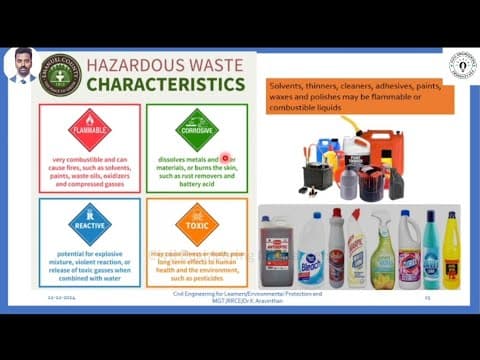
Hazardous waste is defined by its potential to cause harm. There are four major characteristics that classify waste as hazardous:
Flammable waste can easily catch fire. Common examples include:
These materials can ignite under certain conditions, posing a fire hazard.
Corrosive waste can deteriorate materials and cause burns. This includes:
Examples of corrosive substances are hydrochloric acid, sulfuric acid, and organic acids like lactic acid, which can harm both materials and human skin.
Reactive waste can undergo violent chemical reactions when exposed to heat or water. Examples include:
These materials can create toxic gases or cause explosions under specific conditions.
Toxic waste can cause severe health effects or death upon exposure. Symptoms of toxicity may include:
Examples of toxic substances include arsenic, barium, and cadmium.
Transboundary movement refers to the transport of hazardous waste across borders. In India, strict regulations govern this process to prevent the import of hazardous waste unless it is for recycling or recovery purposes. The Pollution Control Board oversees these regulations, ensuring that hazardous waste is not imported for disposal.
Disposing of hazardous waste requires careful consideration to minimize environmental impact. Here are some common disposal methods:
Incineration involves burning hazardous waste at high temperatures (900 to 1,200 degrees Celsius), converting it into ash and gases. Modern incinerators are equipped with filters and scrubbers to control emissions.
Chemical treatment neutralizes hazardous waste by adjusting pH levels. For example, adding a base to an acid can neutralize its corrosive properties.
Biological methods utilize microorganisms to break down hazardous substances. This can be effective for certain types of organic waste.
Physical treatment methods include solidification and stabilization, which reduce the mobility of hazardous waste and prevent leaching into the environment.
Landfill disposal involves placing hazardous waste in specially designed landfills with liners to prevent leakage. This method is often used for solid and liquid waste.
Deep well injection involves pumping liquid hazardous waste deep underground, below the groundwater level, to prevent contamination.
Surface impoundments are used for liquid waste, where waste is stored in ponds or lagoons lined to prevent leakage.
Encapsulation involves enclosing hazardous waste in solid materials, such as concrete, to prevent exposure and contamination.
Proper management of hazardous waste is essential to protect human health and the environment. Understanding the characteristics of hazardous waste, adhering to regulations regarding transboundary movement, and employing appropriate disposal methods are critical steps in mitigating the risks associated with hazardous waste. By prioritizing recycling, recovery, and safe disposal, we can minimize the impact of hazardous waste on our planet.



















