
This blog post explores the concept of Holy Tradition in Christianity, its biblical foundations, historical development, and its significance in contemporary Christian practice. It highlights the differences among various Christian denominations regarding the interpretation and application of tradition, and discusses the challenges faced by Holy Tradition in today's secular world.
Holy Tradition is a fundamental aspect of Christianity that encompasses the living transmission of faith, practices, and teachings passed down from the apostles through the church. This blog post aims to provide a comprehensive understanding of Holy Tradition, its biblical basis, historical development, and its relevance in contemporary Christianity.
Holy Tradition can be defined as the living transmission of Christian faith, practices, and teachings that have been passed down from the apostles through the church. It is essential to recognize that Holy Tradition is considered complementary to the Holy Scripture, guiding the interpretation and application of the Bible. This relationship between tradition and scripture is crucial for understanding the nuances of Christian theology.
Several passages in the Bible emphasize the importance of tradition. For instance, in 2 Thessalonians 2:15, it is stated: "Dear brothers, stand fast and keep the traditions through which you have been taught, either by word or by epistle." This highlights the necessity of adhering to both oral and written traditions. Similarly, 1 Corinthians 11:2 reinforces this idea by urging believers to maintain the teachings they received.
Before the New Testament was fully written, Christian teachings were primarily preserved through oral tradition. Jesus himself criticized human-made traditions that contradicted God's commandments, as seen in Mark 7:8. This underscores the importance of ensuring that traditions align with the divine message of the scriptures.
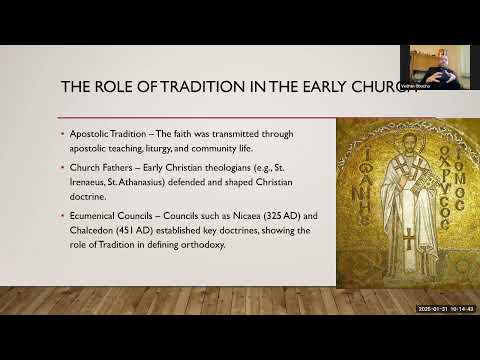
The role of tradition in the early church was vital for the transmission of faith. Apostolic tradition, which refers to the teachings and practices passed down from the apostles, formed the foundation of Christian belief. The apostles, having encountered Jesus directly, were considered the original source of Christian teachings. While only a few apostles wrote down their teachings, many others contributed to the oral tradition that was later documented.
Following the apostles, bishops and church fathers played a crucial role in transmitting knowledge and shaping Christian doctrine. The early church faced numerous theological questions, particularly regarding the nature of Christ and the essence of Christian faith. This led to the establishment of church councils, which sought to define orthodoxy and address various theological disputes.
Throughout history, Holy Tradition has been shaped by various church councils, particularly the seven ecumenical councils held between the 7th and 9th centuries. The Council of Nicaea in 325 AD and the Council of Chalcedon in 451 AD were particularly significant in defining key aspects of Christian doctrine, such as the nature of Christ.
Different Christian denominations have interpreted and applied Holy Tradition in various ways. The Eastern Orthodox Church views tradition as a continuous living experience, while the Roman Catholic Church emphasizes the authority of the magisterium to discern correct interpretations of tradition. In contrast, many Protestant denominations adhere to the principle of sola scriptura, asserting that scripture alone is sufficient for understanding Christianity.
Holy Tradition encompasses various components, including:
In today's secular world, Holy Tradition faces numerous challenges, including the influence of modern culture and technology. However, it remains a vital aspect of Christian identity, preserving the core of the faith and fostering unity among believers. The essence of Holy Tradition is to adapt to contemporary challenges while maintaining the integrity of the Gospel message.
Holy Tradition plays a crucial role in preserving the faith, fostering unity, and providing ethical guidance in a rapidly changing world. It serves as a reminder that, despite differences among Christian denominations, there is much more that unites believers than divides them. Engaging with Holy Tradition encourages further study and reflection, helping individuals navigate their faith journeys in today's complex landscape.
In summary, Holy Tradition is not merely a relic of the past but a living, dynamic aspect of Christianity that continues to shape the faith and practice of believers around the world.



















