
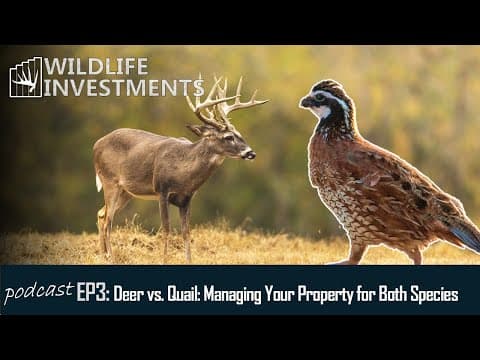
This blog post explores the management strategies for balancing deer and quail populations on your property. It discusses the importance of thermal cover, habitat management, and the trade-offs involved in prioritizing one species over the other. Insights from experts highlight how effective management can benefit both species simultaneously, emphasizing the need for tailored approaches based on property characteristics.
Wildlife management is a complex field that requires a deep understanding of various species and their habitats. In this blog post, we will explore the management strategies for balancing deer and quail populations on your property. This discussion is particularly relevant for landowners who wish to create a thriving ecosystem that supports both species.
One of the critical aspects of wildlife management that is often overlooked is thermal cover. In southern regions, the impact of heat on wildlife, particularly deer and Bobwhite quail, can significantly influence their movement patterns and overall health. Thermal cover provides essential shelter from extreme temperatures, which is vital for both species.
For deer, adequate thermal cover can reduce stress during hot weather, allowing them to conserve energy and maintain their health. Similarly, Bobwhite quail rely on thermal cover for protection from predators and harsh weather conditions. Therefore, managing thermal cover should be a priority for landowners aiming to support both deer and quail populations.
When managing a property for wildlife, landowners often face trade-offs between prioritizing deer or quail. The question arises: if the primary objective is to create a thriving deer population, what might be sacrificed in terms of quail habitat, and vice versa?
Dr. Mark McConnel, an expert in wildlife management, emphasizes that the approach to managing for either species depends on the specific characteristics of the property. For instance, properties with more bottomland may have different management needs compared to those with upland areas.
When focusing on deer management, landowners might prioritize food plots and cover that benefits deer, potentially at the expense of quail habitat. Conversely, properties managed primarily for quail often see a decline in deer populations if the habitat is not conducive to their needs.
Despite these trade-offs, there are strategies that can benefit both species. For example, managing food plots and thinning areas to allow sunlight to reach the ground can create a more diverse habitat that supports both deer and quail. By implementing practices such as controlled burns and selective herbicide use, landowners can enhance the habitat for both species simultaneously.
Throughout the discussion, it becomes clear that many landowners who prioritize quail management are also avid deer hunters. This dual interest creates an opportunity for integrated management strategies that can satisfy both objectives.
Dr. McConnel notes that properties focused on maximizing quail numbers often still support healthy deer populations. The key lies in understanding the habitat components that overlap for both species and managing them effectively.
The habitat components that benefit both deer and quail include:
In conclusion, managing a property for both deer and quail requires careful consideration of habitat needs and the potential trade-offs involved. By focusing on thermal cover and implementing integrated management strategies, landowners can create a thriving ecosystem that supports both species. The insights from experts like Dr. McConnel highlight the importance of tailored approaches based on property characteristics, ensuring that both deer and quail can coexist and flourish in a well-managed environment.



















