
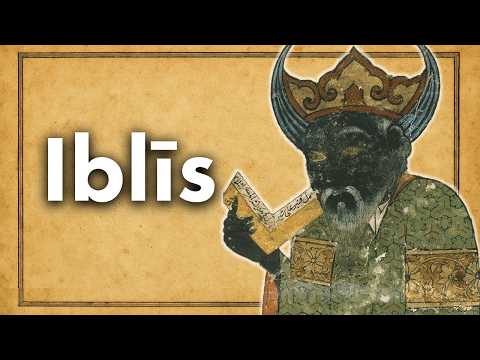
In Islamic tradition, Iblis, often referred to as Satan, plays a unique role distinct from the Christian devil. He is not a fallen angel but a jinn who tempts humanity, embodying pride and disobedience. His story raises profound questions about free will, the nature of evil, and the relationship between divine command and human agency.
In Islamic tradition, the figure of Satan, known as Iblis, is conceptualized quite differently than in Christianity. Rather than being a fallen angel engaged in a cosmic battle against God, Iblis serves as a lurking whisperer, a corrupting force that tempts and deceives humanity from the shadows.
Iblis is referred to by several names in Islamic texts, including Ashaitan (the devil) and Aladu (the adversary). The Quran specifically names him as Iblis, a term that has sparked much discussion among scholars and theologians regarding his origins and role in the spiritual realm.
Unlike the Christian portrayal of Satan, who is often depicted as a rebellious angel, Iblis is understood to be one of the jinn, a supernatural being created from smokeless fire. This distinction is crucial, as jinn possess free will and can be either good or evil, unlike angels, who are seen as obedient servants of God without free will.
Iblis is believed to be a master of temptation, inducing sinful behavior such as pride, envy, lust, gluttony, greed, and hatred. He is said to whisper sinful suggestions into the ears of those who will listen, a phenomenon referred to in Arabic as waswasa, which literally means whispering.
According to Islamic tradition, Iblis can take on various forms, except for that of the Prophet Muhammad, and can even distract individuals during prayer, causing them to forget their recitations or jumble their words. A notable hadith recounts how Iblis was said to have urinated in the ears of a man who overslept through his morning prayer, illustrating the belief that missing prayer is often attributed to satanic interference.
The Quran narrates the story of Iblis's refusal to bow to Adam, the first human created by God. When God commanded the angels to prostrate to Adam, Iblis refused, claiming superiority because he was made of fire while Adam was made of clay. This act of defiance led to his expulsion from heaven, but he was granted a reprieve until the Day of Judgment to tempt humanity.
Iblis's story raises significant theological questions about the nature of evil and free will. While he is a source of temptation, Islamic teachings emphasize that individuals are responsible for their own actions. The Quran suggests that evil exists not because God cannot prevent it, but because He allows it as part of the divine plan.
Muslims actively engage with the concept of Iblis during various religious practices. For instance, during the Hajj pilgrimage, one of the rituals involves the stoning of the devil, symbolizing the rejection of Iblis's temptations. This act commemorates the story of the Prophet Abraham, who resisted Iblis's attempts to dissuade him from sacrificing his son Ishmael.
Throughout Islamic history, interpretations of Iblis have varied widely. Some early scholars viewed him as an angel, while modern consensus leans towards understanding him as a jinn. This debate reflects broader discussions about the nature of angels and jinn in Islamic cosmology.
Mystics like Mansur Al-Hallaj have offered alternative views, portraying Iblis not merely as a figure of pride but as one whose refusal to bow was rooted in profound devotion to God. This interpretation suggests that Iblis's actions stem from a complex relationship with divine command, raising questions about the nature of obedience and love.
Iblis remains a powerful symbol within Islamic thought, embodying the tension between free will and divine command, as well as the complexities of human nature. His story continues to inspire theological debate and artistic expression, reflecting the rich tapestry of interpretations that have emerged over centuries. As Muslims navigate their faith, the figure of Iblis serves as a reminder of the ever-present struggle against temptation and the importance of personal accountability in the face of evil.



















