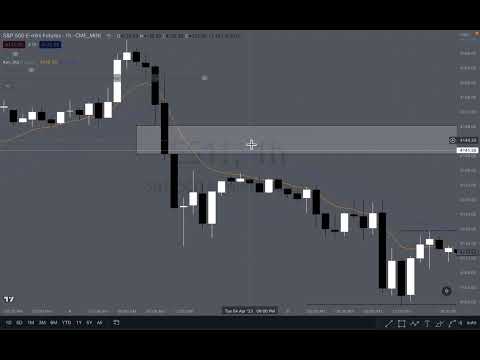
This blog post explores the basics of ICT (Inner Circle Trader) concepts, focusing on liquidity, fair value gaps, and order blocks. It explains how these concepts can enhance trading strategies, particularly in scalping, by providing insights into market movements and trader behavior.
In this blog post, we will delve into the basics of ICT (Inner Circle Trader) concepts and how they can be effectively integrated into trading strategies, particularly for scalping. The focus will be on three key concepts: liquidity, fair value gaps, and order blocks. These concepts can provide valuable insights into market movements and trader behavior, enhancing your trading decisions.
ICT, developed by Michael J. Huddleston, is a trading methodology that emphasizes understanding market structure and trader psychology. While many traders have their own strategies, incorporating ICT principles can add extra confluence to trades and setups. This post will cover the fundamental aspects of ICT without overwhelming beginners with complex concepts.
One of the most significant lessons learned from ICT is the concept of liquidity. According to ICT, price movements are driven by algorithms that target liquidity rather than being solely influenced by buying or selling pressure. This means that price tends to move towards areas where it can stop out retail traders, creating opportunities for informed traders.
In the context of liquidity, there are two main types:
For example, when analyzing a chart, traders should identify the nearest areas of sell side liquidity, which often represent significant support levels. By marking these areas, traders can anticipate potential price movements.
A sweep occurs when price moves to take out stops at these liquidity levels. For instance, if many traders have their stop losses set at a recent low, the price may dip below that level to trigger those stops before reversing direction. This behavior can be observed in both buy side and sell side liquidity scenarios, where price action often leads to significant market reactions.
Fair value gaps are another critical concept in ICT trading. A fair value gap occurs when there is a rapid price movement that creates an imbalance in liquidity. This gap represents areas where orders may not have been filled, and price often returns to these gaps to fill them.
To identify a fair value gap, traders should look for large candles that indicate significant price movement. For a bearish fair value gap, the low of the previous candle is marked, and the high of the next candle is noted. Conversely, for a bullish fair value gap, the high of the previous candle and the low of the next candle are marked.
Traders can expect price to act like a magnet towards these gaps, often resulting in a bounce when the gap is filled. However, it is essential to remember that not all fair value gaps will validate perfectly, and traders should be prepared for variations in price action.
The final concept discussed is order blocks, which are defined as displacement candles that occur during a break of market structure. An order block indicates a significant price movement that can serve as a potential area of support or resistance.
To identify an order block, traders should look for a large candle that signifies a strong move in one direction. The body of this candle is typically marked to define the order block, as it represents the most substantial part of the price action.
When price approaches an order block, traders can anticipate potential reversals or continuations based on previous price behavior. Like fair value gaps, order blocks can act as areas of interest for traders looking to enter or exit positions.
In summary, the integration of ICT concepts such as liquidity, fair value gaps, and order blocks can significantly enhance trading strategies. By understanding these fundamental principles, traders can better navigate the complexities of the market and make more informed decisions. Whether you are a beginner or an experienced trader, incorporating these concepts into your trading routine can lead to improved outcomes and a deeper understanding of market dynamics.
By keeping these concepts in mind, traders can develop a more robust approach to their trading strategies, ultimately leading to greater success in the markets.