This blog post explores the intricacies of Input Tax Credit (ITC) under GST, detailing the necessary documentation, conditions for availing ITC, and the implications of errors or disputes in invoicing. It emphasizes the importance of compliance with legal provisions to avoid penalties and interest.
Input Tax Credit (ITC) is a crucial aspect of the Goods and Services Tax (GST) framework, allowing businesses to reclaim the tax paid on purchases. This blog post delves into the essential elements of ITC, including the necessary documentation, conditions for availing ITC, and the consequences of non-compliance.
The foundation for claiming ITC lies in the documentation associated with purchases. The primary document required is the invoice or bill for the materials purchased. In cases where there are amendments to the invoice—due to quantity, rate, or value differences—debit notes or credit notes must also be retained. These documents are integral for ITC claims.
For imported materials, a Bill of Entry serves as proof of purchase. The Integrated Goods and Services Tax (IGST) paid on these imports is also eligible for ITC. Additionally, invoices raised by an Input Service Distributor (ISD) to consumers within the company are important for availing ITC benefits.
To successfully claim ITC, registered persons must ensure that all applicable particulars are included in the invoice as specified by the law. Any technical errors in the invoice can lead to denial of ITC. Thus, it is imperative that invoices comply with the provisions of the law, as any missing information may render the invoice invalid, similar to a duplicate note in currency.
The law stipulates several conditions that must be met to avail ITC:
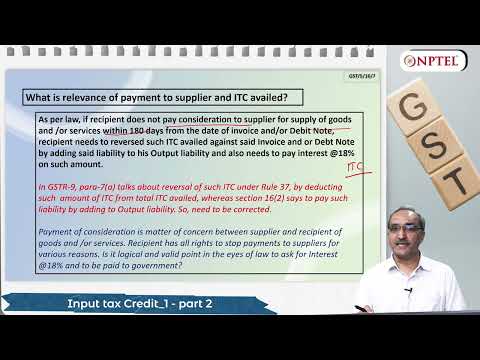
Failure to adhere to these conditions can lead to significant financial repercussions. If ITC is wrongly claimed, the recipient may face an interest charge of 18% and potential penalties. Moreover, if payment is made after the 180-day period, ITC must be reversed along with interest.
In business, it is common for invoices to require amendments due to various issues such as quantity discrepancies or clerical errors. The law allows for such corrections, provided they are made within the specified time frame. For example, if an invoice of 100 rupees is later revised to 110 rupees, the corresponding GST liability and ITC must be adjusted accordingly.
While ITC is generally available for business-related purchases, certain items are classified as blocked credits under Section 17 of the CGST Act. These include:
Certain categories of goods and services are explicitly excluded from ITC eligibility:
Understanding the nuances of Input Tax Credit is essential for businesses to optimize their tax liabilities and ensure compliance with GST regulations. By maintaining accurate documentation, adhering to the stipulated conditions, and being aware of the restrictions on ITC, businesses can effectively manage their tax credits and avoid unnecessary penalties. It is crucial to stay informed about the legal provisions governing ITC to leverage its benefits fully while mitigating risks associated with non-compliance.