
ISO 14000 encompasses a series of international standards for environmental management, focusing on reducing adverse environmental impacts. This blog post explores the history, key elements, benefits, and barriers of implementing Environmental Management Systems (EMS) as per ISO 14001, highlighting the importance of continuous improvement and compliance with legal requirements.
ISO, which stands for the International Organization for Standardization, derives its name from the Greek word meaning equality. The ISO standards aim to ensure equality across organizations, particularly in the context of environmental management. The ISO 14000 series, initiated in 1996 and revised in 2015, focuses on reducing adverse environmental impacts through a structured Environmental Management System (EMS).
ISO 14001 is the primary standard within the ISO 14000 series that specifies the requirements for an effective EMS. Other standards in the series include ISO 14002, which provides guidelines for establishing an EMS, and ISO 14004, which offers general guidelines on environmental management. Additionally, ISO 14015 focuses on environmental assessment, while ISO 14031 deals with environmental performance evaluation. The series also includes standards for life cycle assessment and ecological labeling.
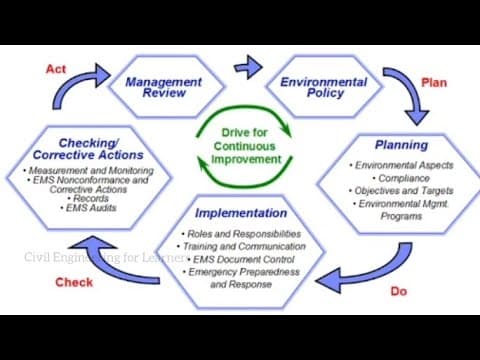
The EMS process is systematic and involves several key elements:
Organizations must establish a clear environmental policy that outlines their commitment to environmental management.
Planning involves identifying environmental aspects and setting objectives and targets for improvement. This includes assessing legal requirements and determining significant impacts.
This phase includes establishing roles and responsibilities, providing training and awareness, and ensuring effective communication within the organization.
Organizations must monitor key activities, conduct periodic assessments, and implement corrective actions for any non-conformities.
Regular management reviews are essential to ensure the EMS remains effective and aligned with the organization’s objectives.
Implementing an EMS according to ISO 14001 offers numerous benefits:
Despite the benefits, several barriers can hinder the successful implementation of an EMS:
The ISO 14000 series, particularly ISO 14001, plays a crucial role in promoting environmental management across organizations. By adopting these standards, companies can not only enhance their operational efficiency but also contribute positively to environmental sustainability. Understanding the benefits and barriers of EMS implementation is essential for organizations aiming to achieve ISO certification and improve their environmental performance.



















