
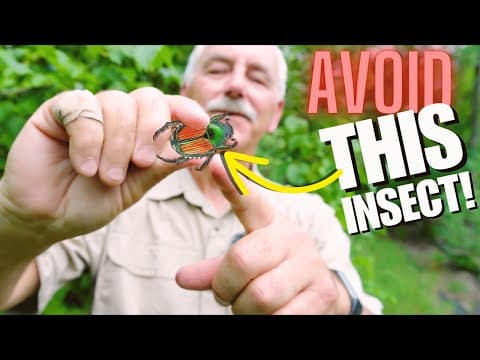
Japanese beetles, originally from Japan, have become invasive in North America and Europe. This blog post explores their life cycle, preferred plants, control methods, and their role as indicators of plant health, emphasizing the importance of biodiversity and plant vitality in managing their populations.
As summer arrives, many gardeners and homeowners find themselves facing an invasion of Japanese beetles. This blog post will delve into how to control these pests, their classification as invasive species, their identification, and their significance as indicators of plant health.
Japanese beetles are easily recognizable due to their distinct appearance. They are green with a bronze or brass-colored back and possess two covers on their wings. If you're unsure about their identity, a quick search for "Japanese beetle" will confirm their characteristics. Originally from Japan, these beetles have spread to North America and Europe, where they have become a nuisance due to the absence of their natural predators.
Yes, Japanese beetles are considered invasive. They have expanded their range significantly over the past 25 years, invading areas where they were previously absent. Their introduction to new environments has led to ecological disturbances, as they lack the natural control agents that would typically keep their populations in check.
The life cycle of Japanese beetles begins with the adult beetles, which emerge in late spring to early summer. During their short lifespan of 30 to 45 days, they primarily eat, mate, and lay eggs. The female beetles lay approximately 30 to 45 eggs in or near the soil. The larvae, known as grubs, hatch and burrow into the soil, where they feed on plant roots, particularly grasses. Depending on the climate, these grubs can take one to two years to mature before emerging as adults.
Japanese beetles have a particular affinity for certain plants. While they do not typically feed on apples, they are often found on:
The specific plants they target can vary by region, but they generally prefer those with tender leaves.
Controlling Japanese beetles can be challenging, but there are several effective methods:
Over time, the population of Japanese beetles tends to peak and then decline as natural predators establish themselves. In Japan, beetles are not a significant problem due to the presence of various predators. In North America, two main predators have been introduced to help control the beetle population:
Encouraging birds in your garden by adding nest boxes can help reduce beetle populations over time.
Japanese beetles are likely to continue expanding their range but will eventually become just another part of the ecosystem. As their predators catch up, their populations may stabilize. However, it is essential to understand that they serve as indicators of plant health.
The presence of Japanese beetles can signal underlying issues with plant health. Sir Albert Howard famously stated that pests and diseases point to the root of the problem. Japanese beetles are often a sign that a plant is not thriving. By examining why certain plants are affected while others are not, gardeners can identify and address the health needs of their plants.
To improve plant health and resilience against pests, consider:
In conclusion, while Japanese beetles can be a nuisance, they also provide valuable insights into the health of our gardens. By understanding their life cycle, preferred plants, and control methods, we can manage their populations effectively and promote healthier ecosystems.



















