
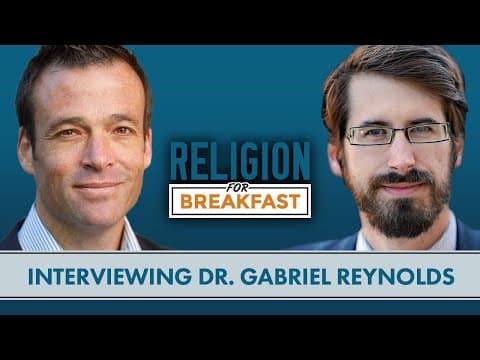
This blog post explores the portrayal of Jesus in Islam, as discussed by Dr. Gabriel Said Reynolds. It covers the Quranic narrative of Jesus, the differences between Islamic and Christian views, and the significance of Jesus as a prophet in Islamic theology.
In a recent interview, Dr. Gabriel Said Reynolds, a scholar of Islamic studies at the University of Notre Dame, shared his insights on the figure of Jesus in Islam. His research focuses on the Quran, the origins of Islam, and Muslim-Christian relations, bridging the study of early Islam with biblical scholarship. This post summarizes key points from the discussion, particularly how the Quran depicts Jesus and the overlapping yet divergent traditions of Muslims and Christians regarding him.
Jesus is not only a central figure in Christianity but also holds significant importance in Islam. The Quran presents Jesus as a prophet, engaging with Christian narratives while reshaping key elements of the story. Notably, the Islamic teaching asserts that Jesus was not crucified, a stark contrast to the Christian belief in his death and resurrection. This contention highlights the complex relationship between the two faiths regarding Jesus's identity and role.
In the Quran, Jesus is referred to as "Isa," which differs from the Semitic name "Yeshua" used in Hebrew and Aramaic. This distinction raises questions about the origins of the name and its implications. Scholars have proposed various theories, including connections to pre-Islamic Arabic inscriptions and Jewish traditions. The difference in names serves as a foundation for understanding the unique portrayal of Jesus in the Quran.
The Quran provides limited biographical details about Jesus, which is often overlooked in discussions about doctrinal differences between Christians and Muslims. Key points include:
In Islamic theology, Jesus is regarded as a prophet, which differs significantly from the Christian understanding of him as Lord and Savior. The Quran emphasizes that all prophets, including Jesus, are human and serve to communicate God's message. Jesus's role is to exemplify proper behavior and to predict the coming of Muhammad, reinforcing the continuity of prophethood in Islam.
The Quran presents an enigmatic account of Jesus's end. In chapter 4, verse 157, it states that Jesus was not killed or crucified but was instead raised to heaven by God. This narrative serves to uphold the Quranic view that prophets do not suffer humiliating deaths, contrasting sharply with the Christian narrative of the crucifixion. Various Islamic traditions elaborate on this, suggesting that someone else was made to appear like Jesus and was crucified in his place.
Islamic eschatology includes references to Jesus's return, although the details are less pronounced than in Christian theology. The Quran hints at a future where Jesus will return before the Day of Judgment, unifying believers and confronting an antichrist figure. However, unlike Christian narratives, Jesus does not assume a kingly role; instead, he is seen as a precursor to the Mahdi, a messianic figure who will lead the faithful in the end times.
In the 21st century, Jesus remains a significant figure in Islamic thought, often appearing in apologetic contexts. Muslim apologists frequently use Jesus to engage in dialogue with Christians, emphasizing shared beliefs while asserting the Islamic perspective. Additionally, contemporary literature and sermons reflect a fascination with Jesus, exploring themes of compassion and social justice, which resonate with broader Islamic values.
Dr. Gabriel Said Reynolds's insights into the figure of Jesus in Islam reveal a complex interplay of shared narratives and theological differences between Christianity and Islam. Understanding these nuances enriches the dialogue between the two faiths and highlights the importance of Jesus as a prophet in Islamic tradition. For those interested in further exploring these themes, Dr. Reynolds offers additional resources through his YouTube channel and online courses.



















