
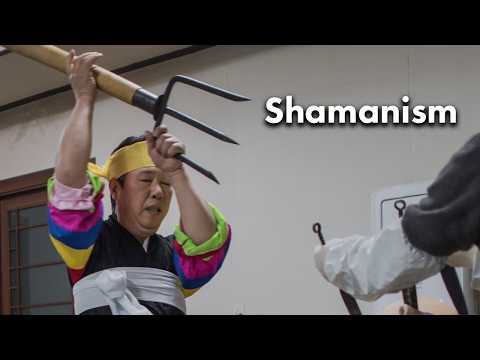
Korean Shamanism, known as Mok or Mugo, is a vibrant spiritual practice that serves as an intermediary between the spirit world and everyday life. This blog post explores its historical roots, diverse practices, and contemporary relevance, highlighting the role of shamans in addressing modern societal issues in South Korea.
Imagine living in Seoul, the capital of South Korea, a hub of technological advancement and dynamic culture. Yet, amidst this modernity, you find yourself facing personal challenges—job troubles, relationship issues, and a general sense of despair. While some might turn to extreme measures for a quick fix, many Koreans seek solace and guidance from a shaman, a practitioner of Korean Shamanism.
Lee Kyong Hun, a 29-year-old shaman and YouTuber with over 300,000 subscribers, exemplifies this modern approach to shamanism. She connects with clients through social media, offering consultations on various life challenges, from economic pressures to personal relationships. Unlike a life coach, Lee claims to divine the will of the gods and ancestral spirits, showcasing the unique blend of spirituality and practicality in Korean Shamanism.
Korean Shamanism, known as Mok or Mugo, is a popular religious practice in Korea. According to anthropologist Laurel Kendall, it involves rituals that engage with gods and ancestral spirits to secure blessings and address afflictions. Shamans conduct both small-scale rituals for everyday problems and larger ceremonies to appease spirits and ensure prosperity.
Shamanism is often associated with indigenous religious traditions, where ritual specialists act as intermediaries between the spirit world and the community. The term itself originates from the Tungusic language of Siberia, referring to those who possess knowledge of the spiritual realm. Western anthropologists have historically used the term to describe various indigenous practices, leading to a somewhat generalized understanding of shamanism.
While some scholars argue that ecstatic experiences define shamanism, Korean practices vary significantly. Some forms emphasize possession and trance, while others do not. This diversity challenges the notion of a universal shamanic experience, highlighting the need for a more nuanced understanding of different cultural practices.
Korean Shamanism features a rich pantheon of deities associated with daily life. These include:
In total, there are approximately 134 different shamanic deities, with shamans often adapting their practices to include new spirits, such as the spirit of General Douglas MacArthur, who is invoked in rituals in Incheon.
There are an estimated 200,000 to 400,000 shamans in Korea, with the majority being women. The term mudong is commonly used, though it can carry derogatory connotations. Shamans are categorized into two main types based on their initiation:
Rituals, known as gut, vary between northern and southern styles. Northern rituals often involve dramatic possession and energetic performances, while southern rituals may be less intense but still significant. Both types serve to manifest spirits and address various life challenges, from healing to ensuring good fortune.
Korea is religiously diverse, with significant populations of Christians, Buddhists, and practitioners of Confucianism and Taoism. Korean Shamanism operates outside these institutional frameworks, blending elements from various traditions while remaining rooted in the everyday needs of the people. Even Christians may seek the guidance of shamans, despite the stigma attached to such practices.
The terms Mok and Mugo emerged in the 20th century, often used derogatorily to categorize indigenous practices. Historical denigration by Confucian scholars and colonial powers contributed to the stigma surrounding shamanism. However, recent years have seen a resurgence in interest and appreciation for shamanic practices, particularly in media and public festivals.
Contemporary shamans like Lee Kyong Hun are adapting their practices to meet the needs of a younger, urban demographic. They are increasingly seen as spiritual guides, offering tailored services that address modern anxieties, such as economic pressures and personal crises. This evolution reflects a shift from traditional village-based practices to a more individualized spirituality.
Korean Shamanism also intersects with geopolitical issues, particularly regarding sacred sites like Pike 2 Mountain, believed to be the source of Korea's geomantic energy. Shamans have begun to perform rituals at this mountain, invoking spirits for national reunification between North and South Korea, showcasing the intertwining of spirituality and national identity.
Korean Shamanism is a complex and evolving practice that reflects the rich cultural tapestry of Korea. As it adapts to modern challenges and societal changes, it continues to play a vital role in the lives of many Koreans, offering spiritual support and guidance in an increasingly fast-paced world. The journey of shamanism in Korea is not just about ancient rituals; it is a living tradition that resonates with the contemporary struggles and aspirations of its people.



















