
This blog post provides a comprehensive overview of the feedback received from a questionnaire on Key Performance Indicators (KPIs) for non-revenue water (NRW). It discusses the structure of the KPI initiative, the importance of accurate data collection, and the challenges faced in benchmarking water loss across different countries. The results highlight the need for clarity in definitions, the significance of various indicators, and the role of regulators and national associations in data collection.
The purpose of this blog post is to provide feedback on the results of a questionnaire conducted as part of the Key Performance Indicator (KPI) initiative for non-revenue water (NRW). This initiative began in June 2023, following discussions between Stuart Hamilton and David Pearson. The main goals are to collect, report, and compare data on water losses and to track progress in addressing these losses across different countries.
The KPI initiative group consists of a core team including David Pearson, Yor Koob, Stuart Tro, and Alan Wyatt, with a broader review group comprising members from the Water Loss Steering Group and various international regulators. The initiative aims to establish effective KPIs that can be used for benchmarking, reference levels, and target setting. A significant challenge has been the distinction between non-revenue water, apparent losses, and real losses, which is crucial for developing appropriate KPIs.
To assess current KPI practices, a questionnaire was designed to gather information on:
The questionnaire was open from May 24 to June 21, 2023, and aimed to understand how different countries manage data assessment for NRW.
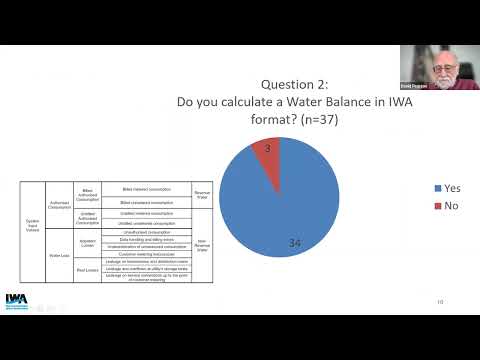
The questionnaire received 37 completed responses from participants across 24 countries on six continents. However, the response rate was lower than expected, with many participants starting but not completing the questionnaire. Most respondents were from Europe, particularly Austria, Germany, Spain, and Poland, while regions like South America and Africa had limited representation.
The questionnaire revealed several challenges in the current KPI landscape:
Moving forward, the KPI initiative aims to:
The feedback from the questionnaire provides valuable insights into the current state of KPI practices for non-revenue water. While there are challenges to address, the initiative has the potential to improve data collection and benchmarking practices globally. By fostering collaboration and clarity in definitions, the KPI initiative can help utilities better understand and manage their water loss, ultimately leading to more sustainable water management practices.



















